
Practice question
Question
Why does a reflecting telescope often use a secondary mirror in its design?
Explanation
**Simple microscope** magnification M = 1 + D/f when image at D=25 cm near point, M = D/f when image at infinity (relaxed eye), f focal length (cm), D least distance of distinct vision 25 cm. For f=4 cm, image at 25 cm, M=1+25/4=7.25, angular magnification ratio of angle subtended by image to that by object at D. In a reflecting telescope (e.g., Cassegrain design), a secondary mirror redirects the light focused by the primary concave mirror through a hole in the primary mirror to the eyepiece. This allows a compact design with a long focal length, improving magnification and convenience of observation. Substituting values
Related blogs
Guides and insights connected to this topic

Anatomy of Flowering Plants Biology Notes - Meristematic and Permanent Tissues, Tissue Systems, Secondary Growth and Dicot Monocot Anatomy
Notes on plant anatomy: meristematic and permanent tissues, apical, intercalary and lateral meristems, tissue systems, secondary growth, and...
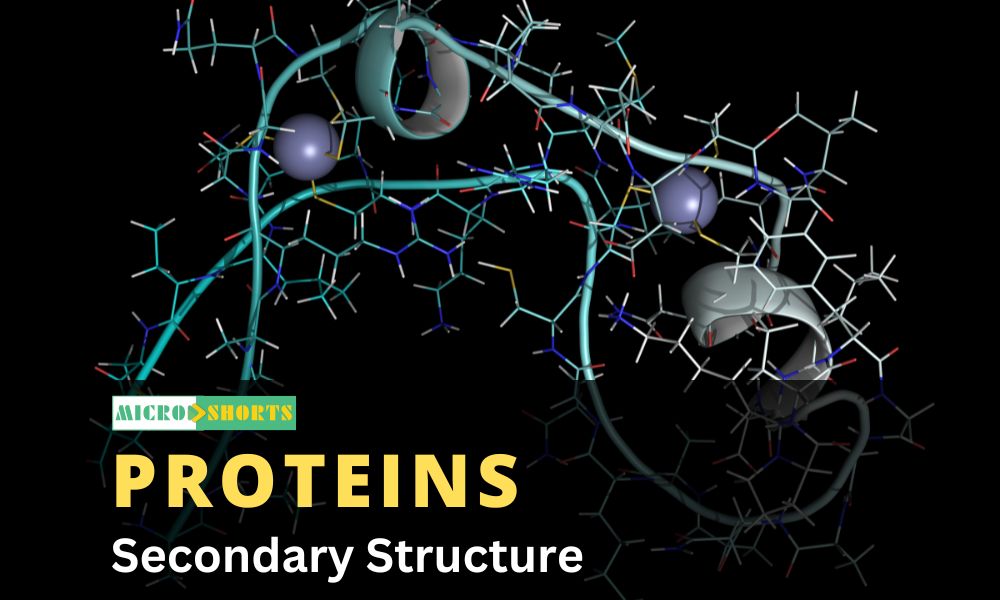
Secondary Structure of Proteins
The nature of the bonds in the peptide backbone plays an important role here. Within each amino acid residue are two bonds with reasonably f...

Animal Cell Culture- Definition, Types, Cell Lines, Procedure, Applications
What is Animal cell culture? Animal cell culture is a type of biotechnological technique where animal cells are artificially grown...
Discussion
Comments
Please log in to join the discussion.
Login to commentNo comments yet. Be the first to start the discussion.