
Practice question
Question
Three charges \( +5 \, \mu\text{C}, -3 \, \mu\text{C}, +4 \, \mu\text{C} \) are at the vertices of an
equilateral triangle of side 1.5 m. What is the force magnitude on \( +5 \, \mu\text{C} \)?
Explanation
**Independent action of charges** allows total force or field as vector sum. Geometry dictates distances to evaluation point, and resultant follows Σ k q_i/r_i², explaining zero field at symmetric centres for equal charges. F₁ = 9 × 10⁹ × (5 × 3 × 10⁻¹²/(1.5)²) = 0.06 N (attractive). F₂ = 9 × 10⁹ × (5 × 4 × 10⁻¹²/(1.5)²) = 0.08 N (repulsive). Angle 60°. Net F = √(F₁² + F₂² + 2 F₁ F₂ cos 60°) = √(0.06² + 0.08² + 0.0048) = 0.108 N . Substituting values gives 0.108 N, which matches expected magnitude for this electrostatic configuration, confirming Coulomb's and Gauss's principles and charge quantization consistency.
Related blogs
Guides and insights connected to this topic

Biological Classification Biology Notes - Five Kingdom System, Monera, Protista, Fungi, Plantae, Animalia, Viruses, Viroids, Prions and Lichens
Biological classification notes on Aristotle's and Linnaeus's systems, the five kingdom system by Whittaker, the three-domain system, viruse...
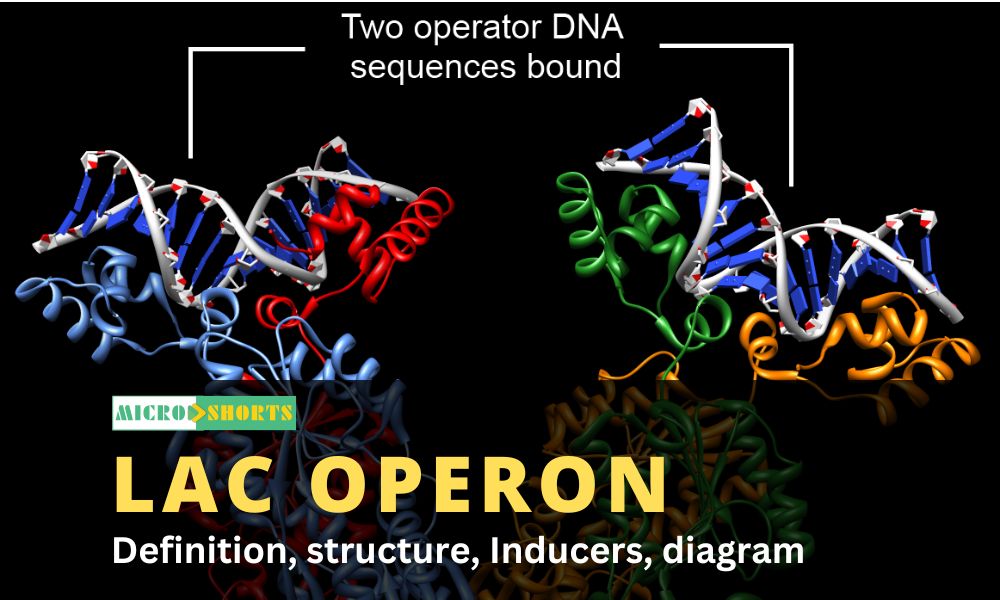
Lac operon- Definition, structure, Inducers, diagram
Lac operon definition The lactose or lac operon of Escherichia coli is a cluster of three structural genes encoding proteins invol...
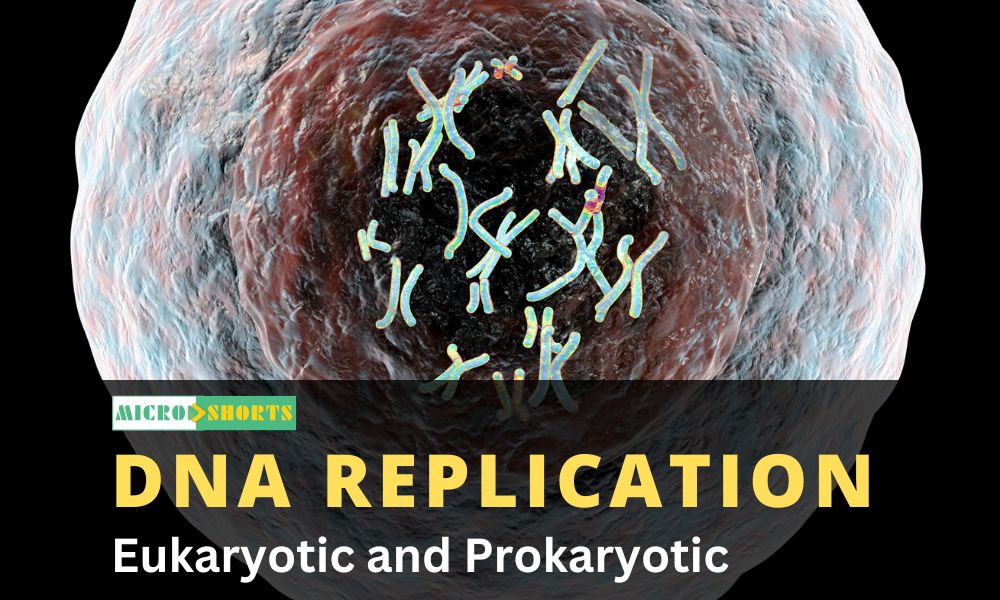
What is DNA Replication?
IntroductionDeoxyribonucleic acid (DNA) is a nucleic acid that is made up of three components: a deoxyribose sugar, a phosphate, and a nitro...

Discussion
Comments
Please log in to join the discussion.
Login to commentNo comments yet. Be the first to start the discussion.