
Practice question
Question
Which of the following is true about secondary succession?
Explanation
Secondary succession follows disturbance of a previously established community when soil and at least some biological legacies remain. Examples include recovery after fire, windthrow, logging, cultivation, or abandonment of pasture. Surviving roots, seed banks, spores, soil microbes, nutrients, and nearby source populations accelerate recolonization. Grasses and fast-growing shrubs may appear first, followed by trees and more shade-tolerant species, although pathways depend on disturbance severity, climate, and invasive species. Primary succession instead begins on surfaces lacking developed soil, such as new lava, recently exposed glacial deposits, or bare rock, and often features lichens among early colonists. Secondary succession can occur around aquatic margins, but “occurs in water” does not define it. Nor does it begin in a completely lifeless area. The retained soil is the major mechanistic distinction: it preserves fertility and propagules and shortens the time needed to rebuild biomass. Therefore, a disturbance within an established community accurately describes the setting in which secondary succession proceeds.
Related blogs
Guides and insights connected to this topic

Ecosystem Biology Notes - Structure, Productivity, Decomposition, Energy Flow, Succession and Nutrient Cycling
Details ecosystem structure, productivity, decomposition, energy flow, succession and nutrient cycling in terrestrial and aquatic systems.

Anatomy of Flowering Plants Biology Notes - Meristematic and Permanent Tissues, Tissue Systems, Secondary Growth and Dicot Monocot Anatomy
Notes on plant anatomy: meristematic and permanent tissues, apical, intercalary and lateral meristems, tissue systems, secondary growth, and...
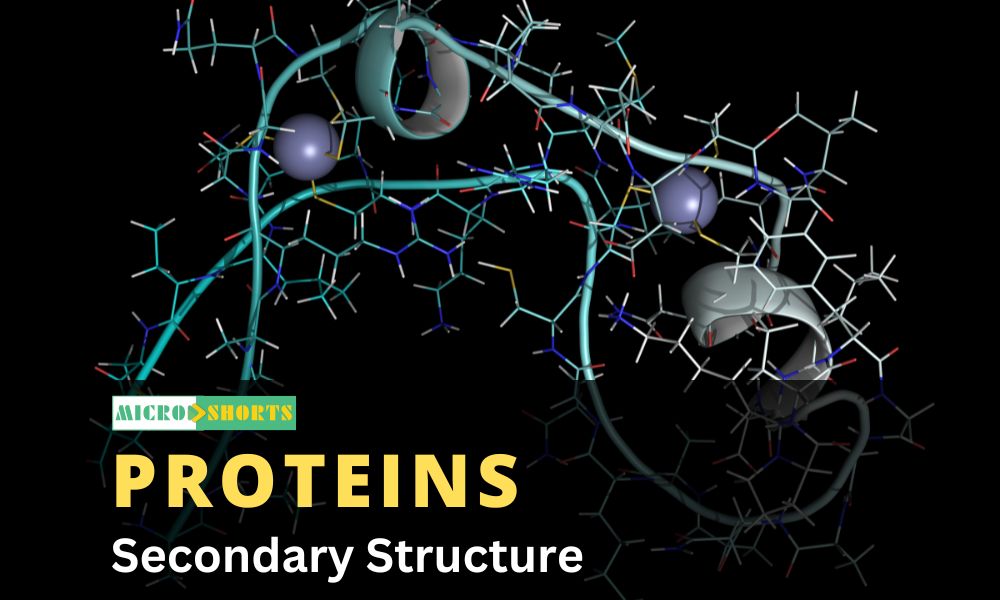
Secondary Structure of Proteins
The nature of the bonds in the peptide backbone plays an important role here. Within each amino acid residue are two bonds with reasonably f...
Discussion
Comments
Please log in to join the discussion.
Login to commentNo comments yet. Be the first to start the discussion.