
Practice question
Question
Which of the following is a permanent adaptation to a specific environment?
Explanation
An ecotype is a genetically differentiated population adapted to the characteristic conditions of a local habitat. Natural selection can favour different alleles in populations occupying contrasting soils, climates, elevations, or salinities, producing inherited differences in morphology, physiology, phenology, or stress tolerance. These traits remain when individuals are raised in a common environment, which distinguishes an ecotype from an ecad. An ecad is a reversible, environmentally induced phenotype generated by plasticity without stable genetic differentiation. A clone consists of genetically identical descendants and can display either plastic forms or mutations, but clonality itself does not mean adaptation to a specific environment. A morph is any distinguishable form and may be genetic, environmental, seasonal, or developmental. “Permanent” in this context means genetically fixed enough to be transmitted across generations, not evolutionarily unchangeable. Reciprocal-transplant studies often show local ecotypes achieving higher fitness in their home sites than foreign populations, providing direct evidence of adaptation. Gene flow can blur ecotype boundaries, yet sufficiently strong divergent selection may maintain them and, over longer periods, contribute to reproductive isolation and speciation.
Related blogs
Guides and insights connected to this topic
Organisms and Populations Biology Notes - Ecology, Abiotic Factors, Adaptations, Population Growth and Interactions
Covers organismal ecology, abiotic factors, adaptations, population growth and species interactions.
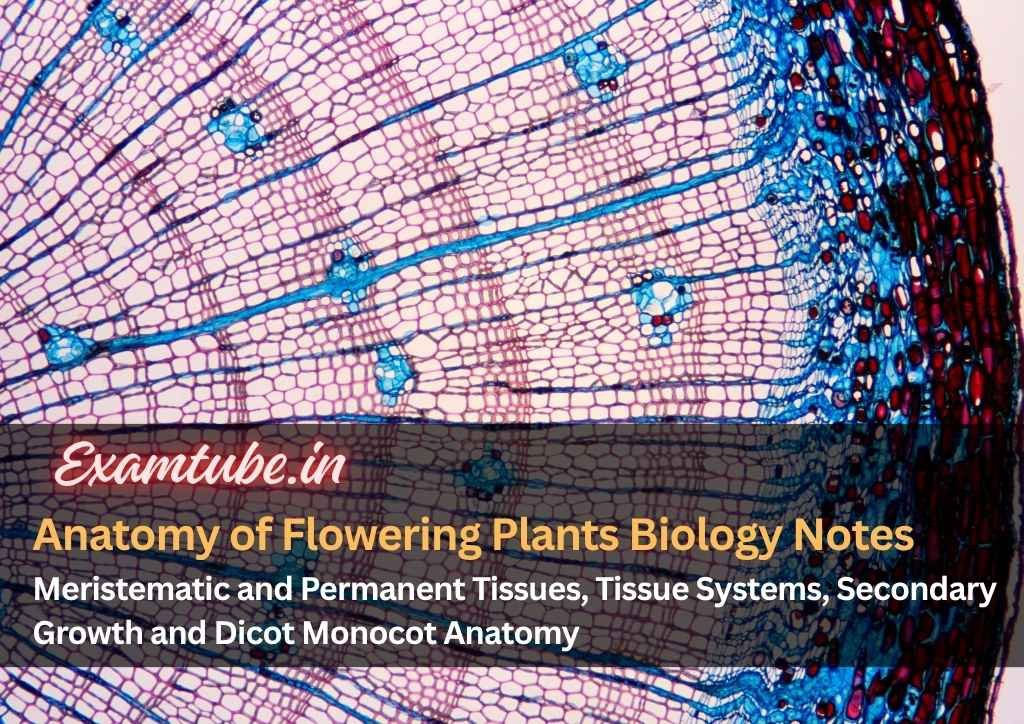
Anatomy of Flowering Plants Biology Notes - Meristematic and Permanent Tissues, Tissue Systems, Secondary Growth and Dicot Monocot Anatomy
Notes on plant anatomy: meristematic and permanent tissues, apical, intercalary and lateral meristems, tissue systems, secondary growth, and...
Preparation of Bacteriological Growth Media
Nutrient AgarPrinciple Nutrient agar allow the growth of a variety of microorganisms that do not usually require specific nutrients or suppl...
Discussion
Comments
Please log in to join the discussion.
Login to commentNo comments yet. Be the first to start the discussion.