
Practice question
Question
Two cells in parallel have emf \( 10 \, \text{V} \) and \( 4 \, \text{V} \) with internal resistances
\( 5 \, \Omega \) and \( 2 \, \Omega \). What is the equivalent emf?
Explanation
**Resistivity temperature variation** ρ_t = ρ₀[1+α(T-T₀)], α ≈4×10⁻³ /°C for copper, 1.7×10⁻⁴ /°C for nichrome. Given R=60 Ω at 30°C, α=1.7×10⁻⁴ /°C, T=330°C, ΔT=300°C, R_t=60[1+1.7×10⁻⁴×300]=60×1.051=63.06 Ω, modest increase for nichrome due to small α. For parallel: εₑq = (ε₁ r₂ + ε₂ r₁/r₁ + r₂) . Substitute: εₑq = (10 × 2 + 4 × 5/5 + 2) = (20 + 20/7) = (40/7) ≈ 5.71 V . Applying I = n e A v_d, R = ρ l/A, R_t = R₀[1+αΔT], Kirchhoff's ΣI=0, ΣV=0, R_eq series/parallel, V = ε - I r and P = I²R, evaluation yields 5.71 V,
Related blogs
Guides and insights connected to this topic
Experiment 9: Study of Meiosis in Onion Bud Cells or Grasshopper Testis Using Permanent Slides
AIM To study the meiosis in onion bud or grasshopper testis using permanent slides. PRINCIPLE Meiosis is reduction division that reduces chromosome number by half and produces four haploid gametes from a diploid parent cell. It consists of two successive divisions, Meiosis-I and...
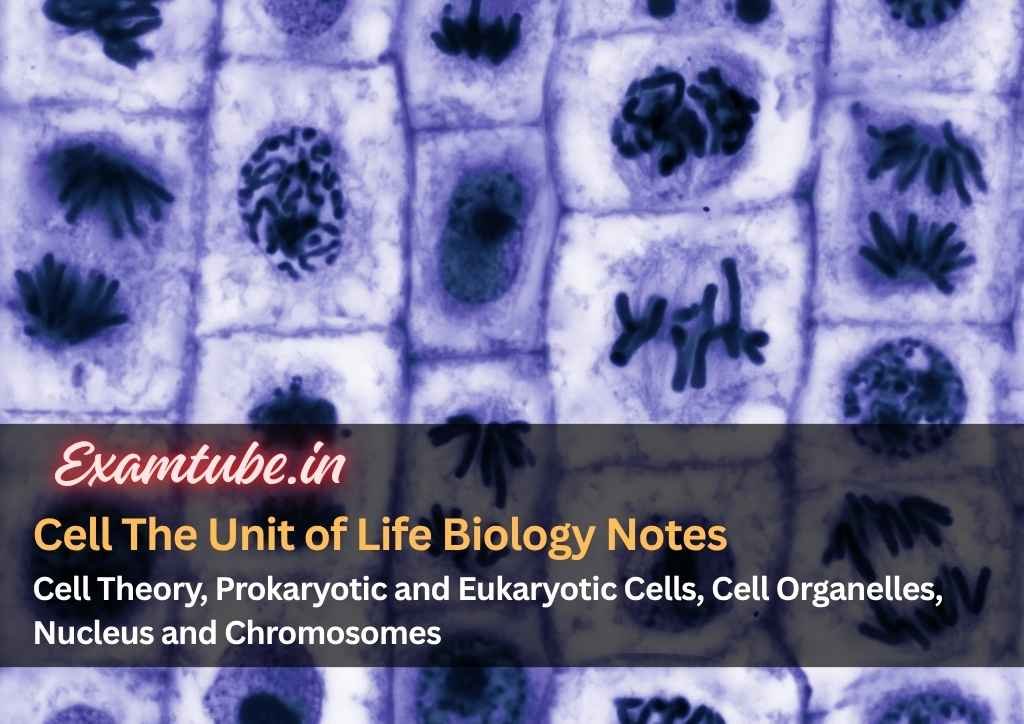
Cell The Unit of Life Biology Notes - Cell Theory, Prokaryotic and Eukaryotic Cells, Cell Organelles, Nucleus and Chromosomes
Notes on Cell: The Unit of Life covering cell theory, prokaryotic and eukaryotic cells, cell organelles, the nucleus and chromosomes.
Plasmolysis: Definition, Types, Forms, Examples and Significance
Learn what plasmolysis is, how it works in plant cells, and why it matters in biology with clear definitions and examples.

Discussion
Comments
Please log in to join the discussion.
Login to commentNo comments yet. Be the first to start the discussion.