
Practice question
Question
Parasitism is best described as:
Explanation
Parasitism benefits the parasite through food, habitat, or transmission opportunities while imposing a fitness cost on the host, so its standard sign pattern is (+,-) when the parasite is listed first. Host costs may include tissue damage, nutrient loss, impaired reproduction, altered behavior, or increased mortality. Unlike a parasitoid, a parasite does not necessarily kill the host as a required developmental outcome, because prolonged host survival can support continued exploitation. (+,0) denotes commensalism and (0,0) neutrality. The reversed notation (-,+) could describe the same relationship only if the host were listed first, but conventional presentation places the beneficiary before the harmed participant. The distinction is biologically useful because ecological labels summarize mechanisms that generate testable predictions. Evaluating costs, benefits, timing, and the identities of interacting organisms prevents confusion between terms that may look similar in a short description. Mechanistic reasoning is essential here: classifications should follow measurable consequences for survival, reproduction, resource acquisition, or detection. Context can modify interaction strength, but it does not erase the defining contrast among the alternatives presented.
Related blogs
Guides and insights connected to this topic
Experiment 15: Identification and Study of Symbiotic Associations (Root Nodules of Leguminous Plants, Lichens) and Parasitism (Cuscuta on Host)
AIM To observe model specimen showing symbiotic association in root nodules of leguminous plants, Cuscuta on host, lichens. PRINCIPLE Symbiosis is close association between two different organisms where at least one is benefited. It includes mutualism where both are benefited, pa...
Morphology of Flowering Plants
The diverse forms of life on Earth were initially described through observation (looking at things with the naked eye or through magnifying...
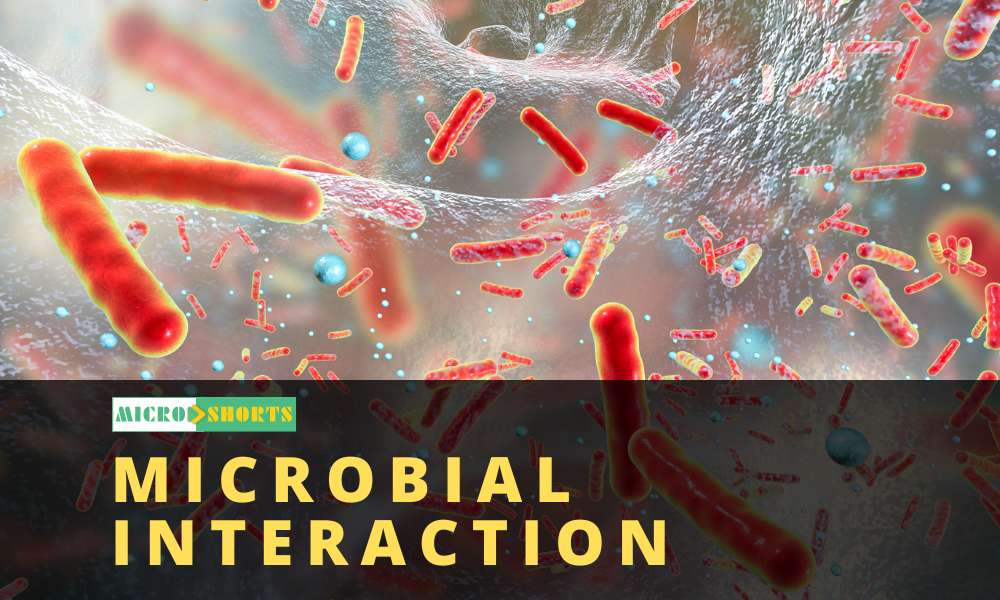
Microbial interaction and its types with examples
Introductions Biological interactions are the effects that the organisms in a community have on one another. There are completely different...

Discussion
Comments
Please log in to join the discussion.
Login to commentNo comments yet. Be the first to start the discussion.