
Practice question
Question
A glass rod is rubbed with silk and acquires a charge of \( +2.5 \times 10^{-7} \, \text{C} \). How
many electrons were transferred from the glass rod to the silk?
Explanation
**Inverse-square law** for charges states F ∝ 1/r² while increasing with charge product. Using k = 9×10⁹ N·m²/C², force at distance r follows F = k q₁q₂/r², forming basis for pairwise force calculation. Charge on glass rod is positive, so electrons are transferred from glass to silk. Charge of one electron e = -1.6 × 10⁻¹⁹ C . Number of electrons: n = (q/|e|) = (2.5 × 10⁻⁷/1.6 × 10⁻¹⁹) = 1.5625 × 10¹² . Substituting values gives 1.56 × 10¹², which matches expected magnitude for this electrostatic configuration, confirming Coulomb's and Gauss's principles and charge quantization consistency.
Related blogs
Guides and insights connected to this topic

Electrophoretic separation of protein by SDS-PAGE
IntroductionElectrophoresis is the process of migration of charged molecules in response to an electric field. The rate of migration depends...

Genus Spirogyra – An Overview
Spirogyra DefinitionSpirogyra is a green alga that is mostly found in freshwater in the form of clumps. These are also called Wate...
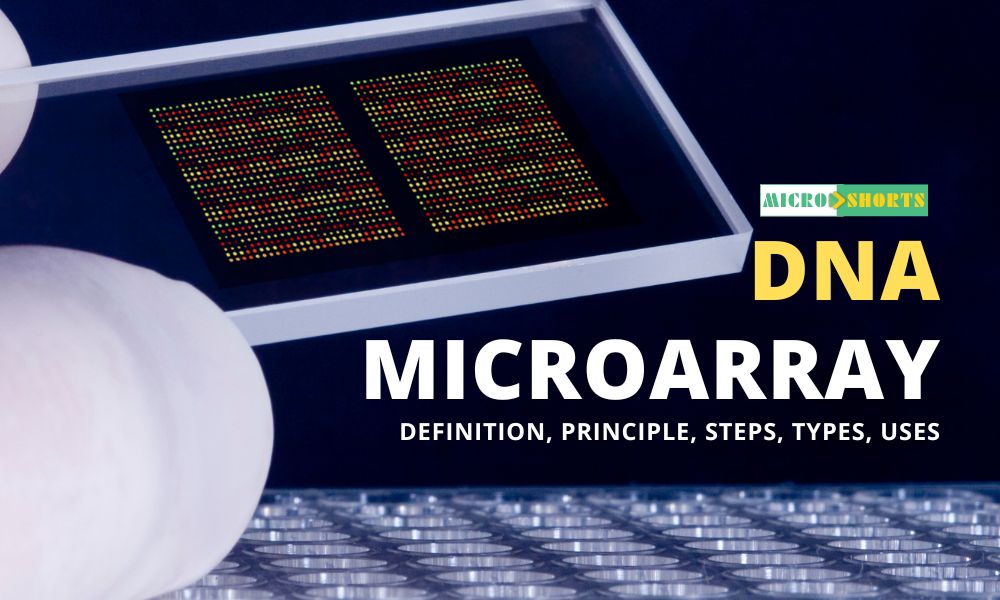
DNA Microarray- Definition, Principle, Procedure, Types
DNA microarrays are solid supports, usually of glass or silicon, upon which DNA is attached in an organized, pre-determined grid fashio...

Discussion
Comments
Please log in to join the discussion.
Login to commentNo comments yet. Be the first to start the discussion.