
Practice question
Question
The radius of a nucleus is \( 6.0 \times 10^{-15} \, \text{m} \). What is its approximate mass number?
(Given \( R_0 = 1.2 \times 10^{-15} \, \text{m} \))
Explanation
**Nuclear radius** R = R₀ A^{1/3}, R₀=1.2×10⁻¹⁵ m, A mass number, for A=16 R=1.2×10⁻¹⁵×2.52=3.02×10⁻¹⁵ m, for A=36 R=1.2×10⁻¹⁵×3.30=3.96×10⁻¹⁵ m, nuclear density ρ = mass/volume = (A×1.66×10⁻²⁷ kg)/(4/3 π R³) ≈2.3×10¹⁷ kg/m³ independent of A, extremely high, mass 3.67×10⁻²⁷ kg radius 2.0×10⁻¹⁵ m gives density =3.67×10⁻²⁷/(4/3 π×8×10⁻⁴⁵)=1.09×10¹⁷ kg/m³. R = R₀ A¹/³ . 6.0 × 10⁻¹⁵ = 1.2 × 10⁻¹⁵ × A¹/³ . A¹/³ = (6.0/1.2) = 5 . A = 5³ = 125 . Using E_n = -13.6/n² eV, r_n = n² a₀, L = n h/2π, R = R₀ A^¹/³, BE = Δm c² and 1 u = 931.5 MeV, evaluation yields 125, consistent
Related blogs
Guides and insights connected to this topic
Periodic Classification of Elements Notes - Dobereiner Triads, Newlands Octaves, Mendeleev and Modern Periodic Table
Explore early attempts to classify elements, covering Dobereiner’s triads, Newlands’ law of octaves and Mendeleev’s table with examples and key details.
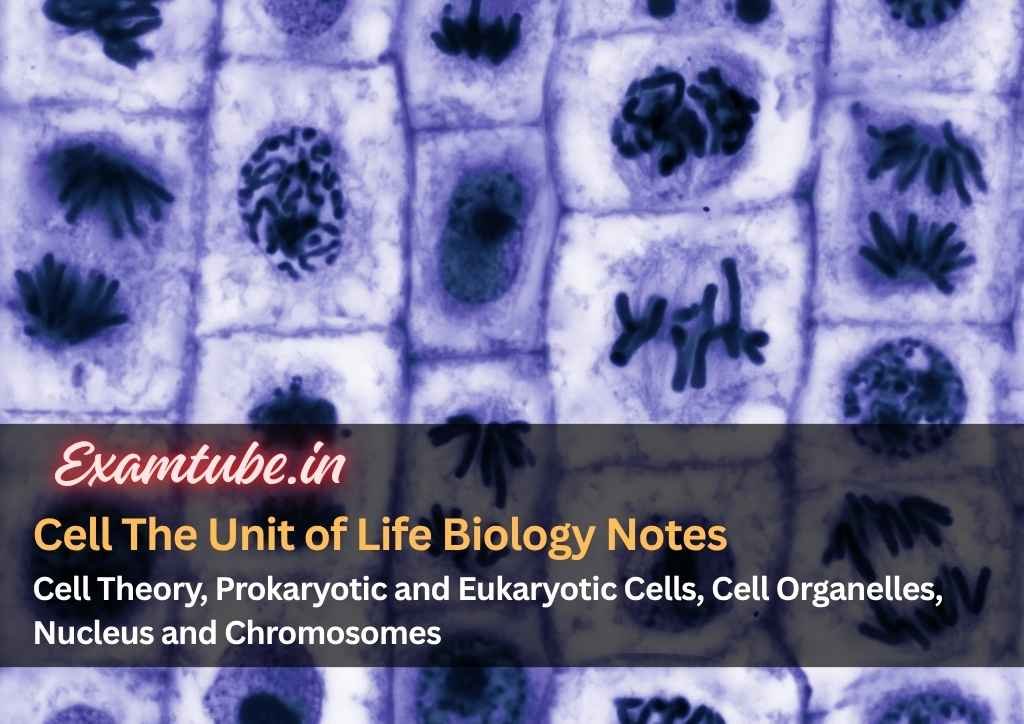
Cell The Unit of Life Biology Notes - Cell Theory, Prokaryotic and Eukaryotic Cells, Cell Organelles, Nucleus and Chromosomes
Notes on Cell: The Unit of Life covering cell theory, prokaryotic and eukaryotic cells, cell organelles, the nucleus and chromosomes.
Cancer Cells: Morphology, Development, Types and Differences from Normal Cells
Learn how cancer cells differ from normal cells in growth, structure, and behavior, including key morphological changes and development patterns.
Discussion
Comments
Please log in to join the discussion.
Login to commentNo comments yet. Be the first to start the discussion.