
Practice question
Question
A spring-mass system has \( m = 0.8 \, \text{kg}, k = 320 \, \text{N/m} \). If displaced by \( 5 \,
\text{cm} \), what is the total energy?
Explanation
**Mass-spring dynamics** show T depends on mass and stiffness, independent of amplitude for ideal spring. Given T and m, k = 4π² m/T² extracted, and energy E = ½ k A² connects amplitude to total mechanical energy, illustrating isochronism. Total energy: E = (1/2) k A² . A = 0.05 m, k = 320 N/m . E = 0.5 × 320 × (0.05)² = 0.5 × 320 × 0.0025 = 0.4 J . Applying x = A cos(ωt + φ), v = -ωA sin(ωt + φ), a = -ω²x and E = ½kA² = ½mω²A², result 0.4 J follows, reflecting SHM dependence on amplitude A, ω and system parameters.
Related blogs
Guides and insights connected to this topic
Periodic Classification of Elements Notes - Dobereiner Triads, Newlands Octaves, Mendeleev and Modern Periodic Table
Explore early attempts to classify elements, covering Dobereiner’s triads, Newlands’ law of octaves and Mendeleev’s table with examples and key details.
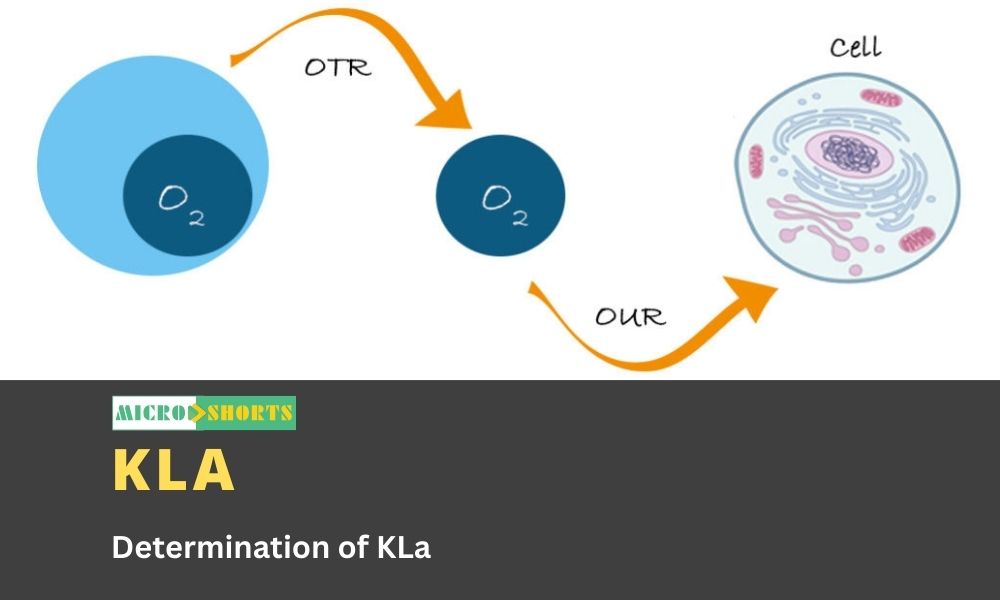
Determination of KLa
IntroductionThe volumetric liquid mass transfer coefficient (KLa) is a useful parameter to characterize the bioreactor's capacity for aerati...
Experiment 16: Flash Cards / Models / Specimens Showing Examples of Homologous and Analogous Organs
AIM To study homology and analogy with the help of models/charts of animals and models/charts/specimens of plants. PRINCIPLE Homologous organs are functionally dissimilar but anatomically or structurally similar. Different modes of life have modified the organs to enable survival...

Discussion
Comments
Please log in to join the discussion.
Login to commentNo comments yet. Be the first to start the discussion.