
Practice question
Question
A spherical conductor of radius 5 cm has a charge of \( 5 \times 10^{-8} \, \text{C} \). What is the
potential at its surface? (Take \( \frac{1}{4 \pi \varepsilon_0} = 9 \times 10^9 \, \text{Nm}^2
\text{C}^{-2} \)).
Explanation
**Series combination** of capacitors has same charge Q on each because connected end-to-end, single path for charge flow, induced charges equal, total voltage V = Σ V_i = Q Σ 1/C_i, so 1/C_eq = Σ 1/C_i. Different potential differences V_i = Q/C_i inversely proportional to C_i, smaller C gets larger V. Potential at the surface: V = (1/4 π ε₀) (Q/R) . V = 9 × 10⁹ × (5 × 10⁻⁸/0.05) = 9 × 10⁹ × 10⁻⁶ = 9000 V . Using V = kQ/r, U = k q₁q₂/r, E = -dV/dr, C = ε₀A/d, 1/C_eq series, C_eq = ΣC parallel, U = ½ C
Related blogs
Guides and insights connected to this topic
Light Reflection and Refraction Notes - Spherical Mirrors, Lenses, Power of Lens and Numericals
Explore key optics concepts: laws of reflection, spherical mirrors, lens power and practice numericals in a concise note.
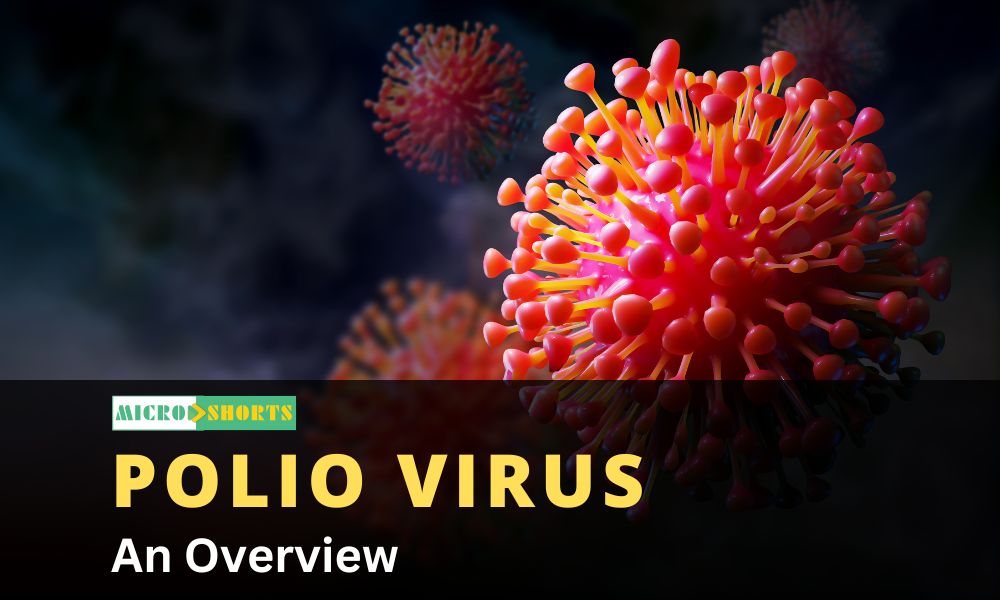
Polio Virus- An Overview
Structure of Polio VirusPoliovirus is a member of a family of viruses called the Picornaviridae. Virions are spherical in shape with a...

Herpes simplex virus 1 (HSV-1)
Introduction Herpesviruses are large (150-200 nm size), spherical in shape with icosahedral symmetry. The icosahedral protein capsid with av...

Discussion
Comments
Please log in to join the discussion.
Login to commentNo comments yet. Be the first to start the discussion.