
Practice question
Question
The critical concentration (Cc) of actin filaments is defined as the concentration at which:
Explanation
Assembly of G actin into F actin follows reversible nucleation condensation kinetics characterized by critical concentration. Defined as monomer concentration at which rate of subunit addition equals rate of loss at filament ends, Cc reflects equilibrium constant Kd equal to k off divided by k on. Experimental determination uses pyrene fluorescence plateau where increasing total actin beyond Cc goes into polymer, free monomer stays constant. Because barbed plus end and pointed minus end have distinct kinetic constants due to ATP versus ADP actin states, each end possesses its own Cc approximately 0.1 micromolar for barbed and 0.8 micromolar for pointed under physiological 50 millimolar KCl 2 millimolar MgCl2. Between these values treadmilling operates, barbed elongates while pointed shrinks, net polymer constant. Complete depolymerization requires dropping below both Cc values or adding sequestering drugs like latrunculin. Branch angle 70 degrees relates to Arp2/3 geometry not Cc, and ATP hydrolysis rate is consequence not definition. Understanding Cc enables prediction of growth versus shrinkage and design of polymerization assays.
Related blogs
Guides and insights connected to this topic

Prokaryotic Cytoskeleton and Its Functions
Prokaryotic Cytoskeleton and Its FunctionsProteins in prokaryotic cells play roles similar to those of the cytoskeleton in eukaryotic cells....

Understanding the Mechanism: How Covishield Vaccine Lead to Blood Clots and Low Platelet Count
Introduction SARS-CoV-2 pandemic is one of the most critical pandemics during human civilization. Several therapeutic strategies for COVID-1...
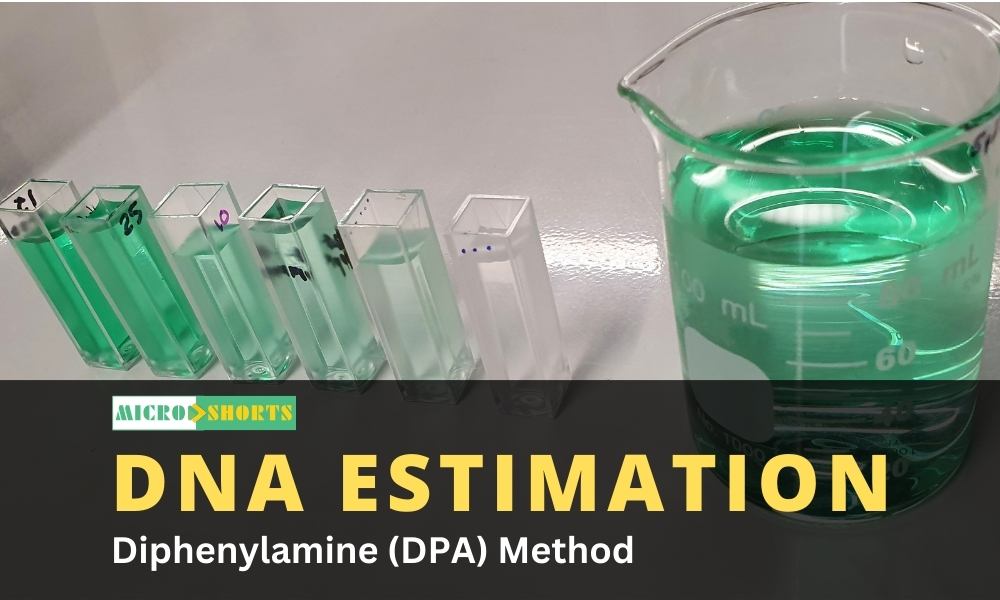
DNA Estimation by Diphenylamine (DPA) Method
IntroductionDetermining DNA quantity and purity is important prior to other reactions (PCR) for which it is necessary to know the exact DNA...
Discussion
Comments
Please log in to join the discussion.
Login to commentNo comments yet. Be the first to start the discussion.