
Practice question
Question
Growth-survival-fecundity triangle classifies plants based on:
Explanation
“Energy allocation patterns” for growth-survival-fecundity triangle classifies plants based on. This relationship follows from the ecological mechanism represented by the terms in the item, not merely from an association between their names. Selection favors the schedule that increases lifetime reproductive success under local mortality and resource conditions. Body size, development time, fecundity, parental investment, and generation length consequently tend to covary. The remaining alternatives—“Habitat structure”, “Ecological dominance”, “Nutrient concentration”—refer to different states, processes, or scales and therefore do not express the same causal relationship. Life-history traits reflect allocation among growth, maintenance, survival, and reproduction. Energy invested in many offspring cannot simultaneously be invested in large offspring, prolonged care, or future breeding, creating measurable trade-offs. The cited framing is therefore most useful when treated as a conditional biological claim, with assumptions about scale and environmental context kept explicit. Linking the wording to measurable consequences for fitness, abundance, or flux gives the conclusion its scientific meaning and prevents a purely mnemonic interpretation.
Related blogs
Guides and insights connected to this topic
Organisms and Populations Biology Notes - Ecology, Abiotic Factors, Adaptations, Population Growth and Interactions
Covers organismal ecology, abiotic factors, adaptations, population growth and species interactions.
Plant Growth and Development Biology Notes - Growth Phases, Growth Rates, Differentiation, PGRs, Photoperiodism, Vernalisation and Seed Dormancy
Read notes on plant growth and development, covering meristems, growth phases, differentiation, plant growth regulators, and photoperiodism.
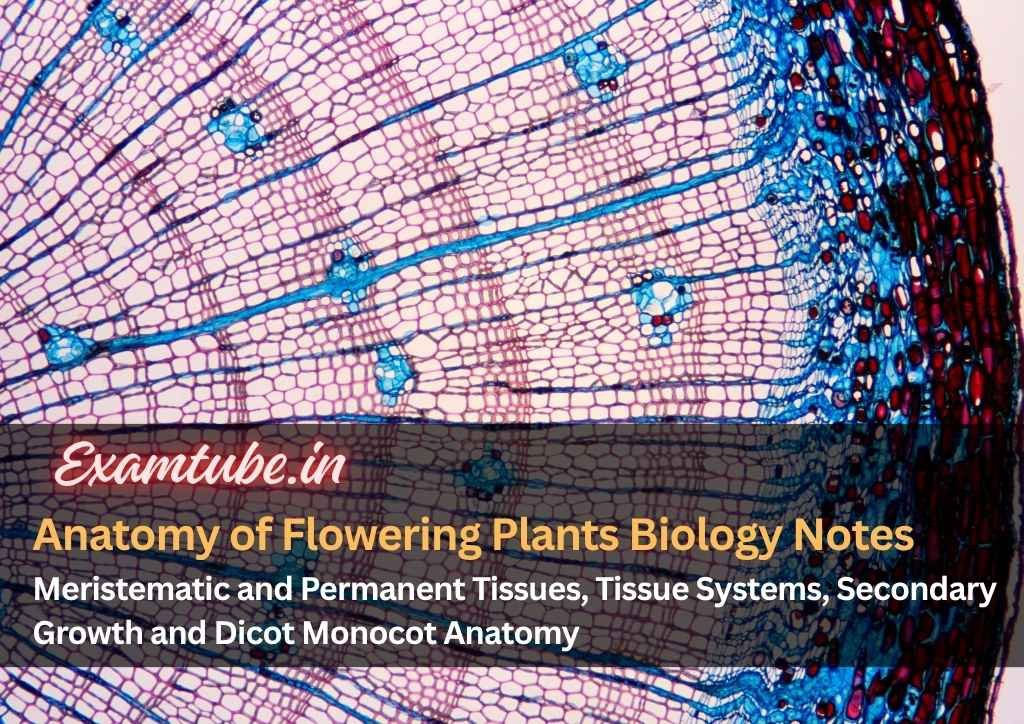
Anatomy of Flowering Plants Biology Notes - Meristematic and Permanent Tissues, Tissue Systems, Secondary Growth and Dicot Monocot Anatomy
Notes on plant anatomy: meristematic and permanent tissues, apical, intercalary and lateral meristems, tissue systems, secondary growth, and...
Discussion
Comments
Please log in to join the discussion.
Login to commentNo comments yet. Be the first to start the discussion.