
Practice question
Question
β-lactam antibiotics inhibit bacterial growth by:
Explanation
Peptidoglycan assembly requires synthesis of soluble UDP-N-acetylmuramyl pentapeptide in cytoplasm, attachment to undecaprenyl phosphate carrier to form Lipid II, flipping to external leaflet, polymerization by transglycosylases and final cross-linking of pentapeptide stems by transpeptidases called penicillin-binding proteins possessing active-site serine. The transpeptidase recognizes the terminal D-Ala-D-Ala motif and catalyzes cleavage of the terminal D-alanine with concomitant formation of a new peptide bond between meso-diaminopimelate or lysine and D-alanine from adjacent strand, conferring mechanical rigidity essential to resist turgor. Beta-lactam antibiotics including penicillins, cephalosporins, carbapenems are structural mimics of D-Ala-D-Ala dipeptide geometry. The strained four-membered beta-lactam ring acts as a suicide substrate, rapidly acylating the active-site serine of PBPs and forming a stable, long-lived acyl-enzyme intermediate that is hydrolyzed extremely slowly. Transpeptidation cannot proceed, new cross-links fail to form, and housekeeping autolysins continue to remodel old wall causing net wall degradation. Cells swell, lose shape and lyse, explaining activity preferentially against actively growing cells, Gram-positive susceptibility and resistance via beta-lactamase production or PBP2a expression.
Related blogs
Guides and insights connected to this topic
Structure of E. coli RNA Polymerase
Subunits of E. coli RNA Polymerase:E. coli RNA polymerase has a unique crab claw-like shape, with a cylindrical channel that binds 16 base p...
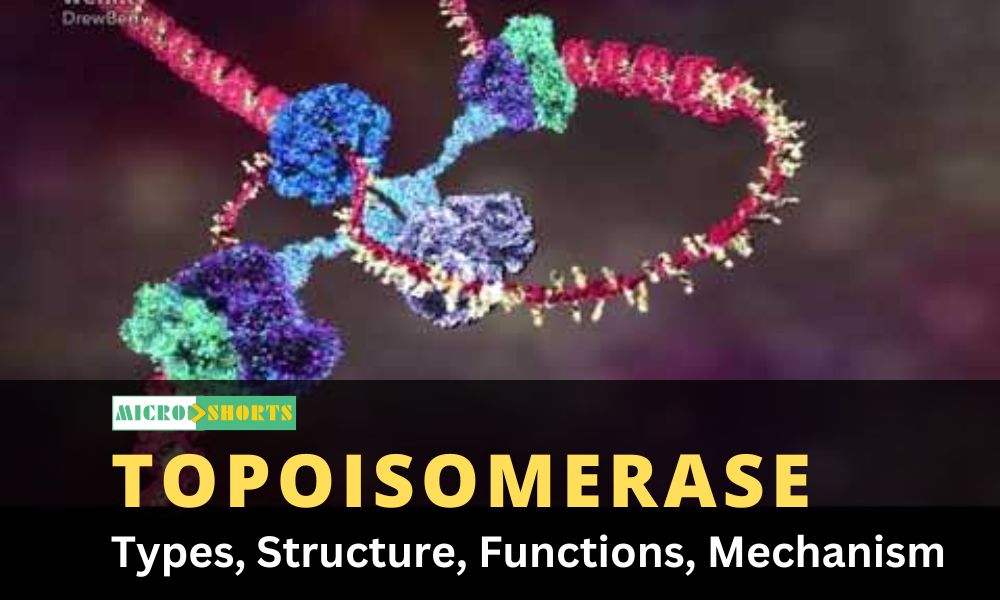
Topoisomerase: Types, Structure, Functions, Mechanism
Isomerase enzymes form or assist in forming isomers of any biological components. They assist in the rearrangement process of different biom...
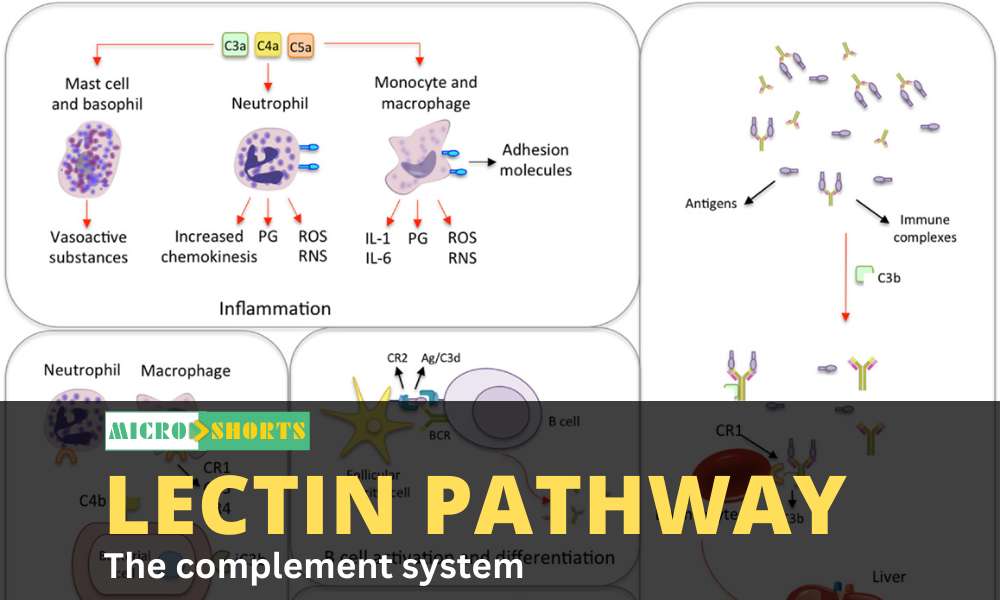
Lectin Pathway of the complement system
The lectin pathway (LP) proceeds like the classical pathway by activating the C3 convertase. The binding of mannose-binding protei...
Discussion
Comments
Please log in to join the discussion.
Login to commentNo comments yet. Be the first to start the discussion.