
Practice question
Question
Which kinase initiates DNA replication by phosphorylating helicase activators?
Explanation
Authentic initiation of DNA synthesis requires coordinated activation of MCM2-7 helicase loaded at licensed origins. Two S-phase kinases perform this: Cdc7-Dbf4 complex called DDK phosphorylates N-terminal tails of MCM2, MCM4 and MCM6 promoting Cdc45 recruitment, while CDK2-Cyclin E and CDK2-Cyclin A phosphorylate Treslin, Ticrr, RecQL4 and TopBP1 creating phospho-binding sites for assembling replication machinery including Cdc45-MCM-GINS active helicase and Pol epsilon recruitment. Entry dataset incorrectly lists p53 as initiating kinase; biologically p53 acts opposite as genome guardian. Upon DNA damage, ATM/ATR stabilizes p53 by phosphorylation disrupting Mdm2 binding, p53 transactivates CDK inhibitor p21 which blocks CDK2-Cyclin E and consequently Rb phosphorylation and origin firing. Thus p53 enforces arrest rather than initiation. In unstressed cycles, rising CDK2 activity after E2F-driven Cyclin E transcription provides permissive signal for origin firing. Therefore genuine replication initiation kinases are DDK and CDK2, while p53 functions to pause cycle for repair, preventing propagation of lesions into S phase. Additional feedback loops involving polo-like kinases, phosphatases and SCF-mediated degradation reinforce irreversibility and protect against premature progression that would compromise genome integrity and viability.
Related blogs
Guides and insights connected to this topic

Molecular Basis of Inheritance Biology Notes - DNA Structure, Replication, Transcription, Genetic Code, Human Genome and DNA Fingerprinting
Notes on DNA’s double helix, replication steps, transcription process, genetic code, human genome and DNA fingerprinting.
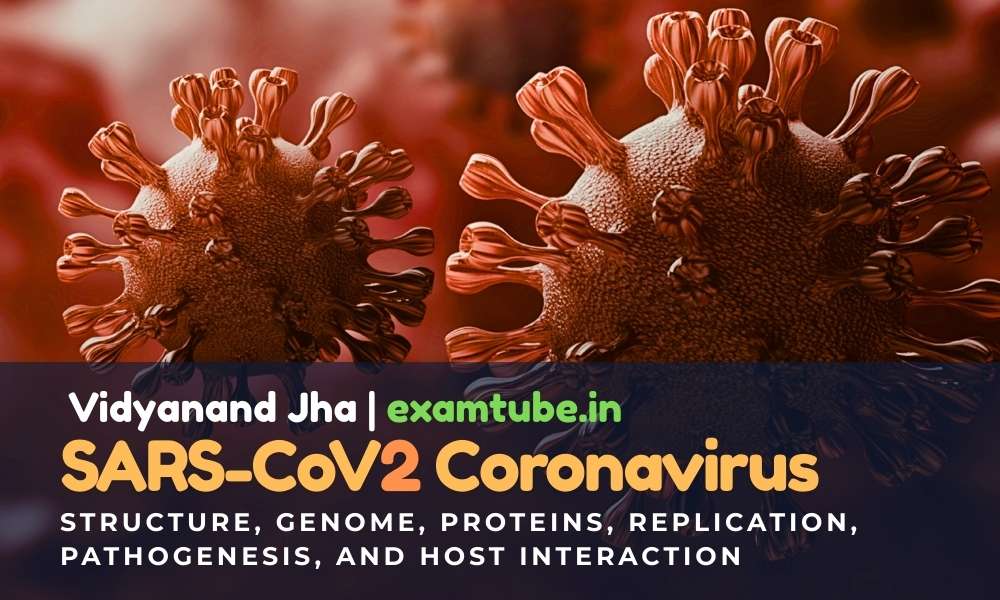
SARS-CoV-2 Coronavirus: Structure, Genome, Proteins, Replication, Pathogenesis, and Host Interaction
Coronavirus Overview Coronaviruses (CoVs) are enveloped viruses (surrounded by a lipid membrane derived from host cells), belonging to the s...

Coronavirus Structure, Genome, Replication, Symptoms, Pathogenesis, and Prevention
Structure of Coronavirus Coronaviruses (enveloped RNA viruses) fall in the virus family Coronaviridae, order Nidovirales. They are enveloped...
Discussion
Comments
Please log in to join the discussion.
Login to commentNo comments yet. Be the first to start the discussion.