
Practice question
Question
A mass oscillates with \( v = -15 \sin (6t) \) (in m/s). What is its amplitude?
Explanation
**Sinusoidal description** links amplitude A and angular frequency ω to instantaneous values. Given x(t) = A cos(ωt), max acceleration ω²A quantifies force requirement F_max = m ω²A, and velocity at arbitrary x is v = ±ω√(A² - x²) from energy conservation. Velocity: v = -ω A sin (ω t) . ω = 6 s⁻¹, vₘₐₓ = ω A = 15 ⇒ A = (15/6) = 2.5 m . Applying x = A cos(ωt + φ), v = -ωA sin(ωt + φ), a = -ω²x and E = ½kA² = ½mω²A², result 2.5 m follows, reflecting SHM dependence on amplitude A, ω and system parameters.
Related blogs
Guides and insights connected to this topic
Periodic Classification of Elements Notes - Dobereiner Triads, Newlands Octaves, Mendeleev and Modern Periodic Table
Explore early attempts to classify elements, covering Dobereiner’s triads, Newlands’ law of octaves and Mendeleev’s table with examples and key details.
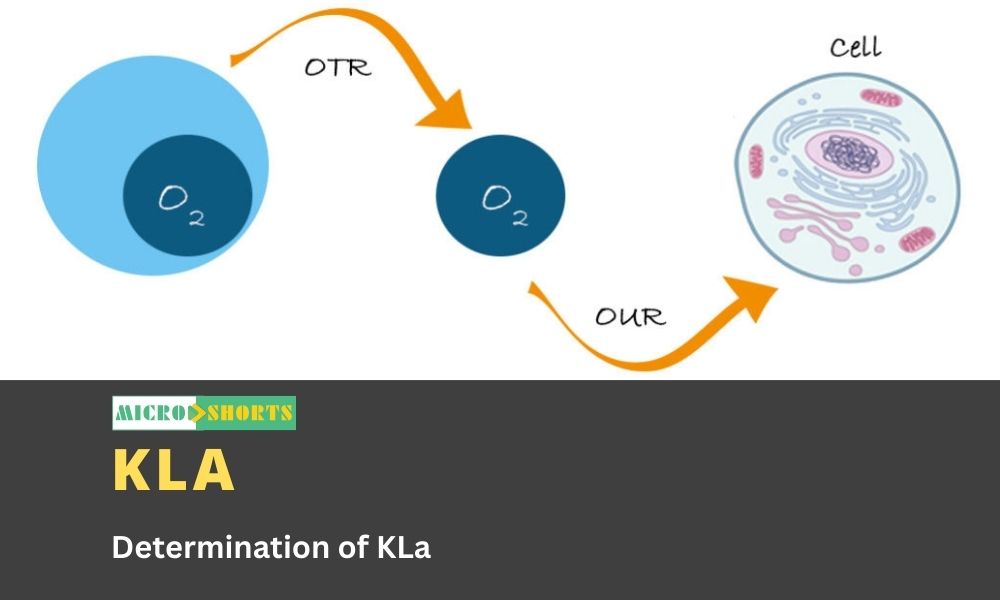
Determination of KLa
IntroductionThe volumetric liquid mass transfer coefficient (KLa) is a useful parameter to characterize the bioreactor's capacity for aerati...
Tissues in Action Notes - Plant and Animal Tissues, Meristematic, Epithelial, Connective and Muscular
Explore how cells form tissues in plants and animals, covering meristematic, epithelial, connective and muscular types, and why their structures differ.
Discussion
Comments
Please log in to join the discussion.
Login to commentNo comments yet. Be the first to start the discussion.