
Practice question
Question
The separation of sister chromatids occurs during:
Explanation
Separation of sister chromatids underlies chromosome segregation during anaphase and relies on coordinated dissolution of cohesin and activation of motor mechanisms. Throughout S phase and G2, cohesin ring comprising Smc1, Smc3, and kleisin Rad21 embraces sister DNAs, establishing cohesion resisting spindle pulling until timely release. Shugoshin-PP2A protects centromeric cohesion specifically until anaphase onset. Upon satisfaction of spindle assembly checkpoint, APC/C-Cdc20 ubiquitinates securin and cyclin B with K11 chains for proteasomal destruction. Securin degradation frees separase endopeptidase that cleaves Rad21 at conserved EXXR sites, irreversibly opening ring along chromosome arms and centromeres. Loss of cohesion allows stored elastic energy release, kinetochore microtubules shorten through depolymerization at kinetochore and pole during anaphase A, while antiparallel interpolar microtubules elongate pushing poles apart during anaphase B involving Eg5 kinesin. Phosphatases reverse CDK1 phosphorylations facilitating chromatin remodeling after separation, ensuring aneuploidy avoidance. This circuitry is highly conserved across eukaryotes, integrating growth factor signals, DNA damage surveillance, and developmental cues, and its disruption frequently underlies oncogenesis, providing targets for checkpoint inhibitors and cancer therapeutics.
Related blogs
Guides and insights connected to this topic
Tissues in Action Notes - Plant and Animal Tissues, Meristematic, Epithelial, Connective and Muscular
Explore how cells form tissues in plants and animals, covering meristematic, epithelial, connective and muscular types, and why their structures differ.
Cell: The Building Block of Life Notes - Structure, Organelles, Division and Cell Theory
Explore the blog post 'Rest' covering goo time in a concise read.
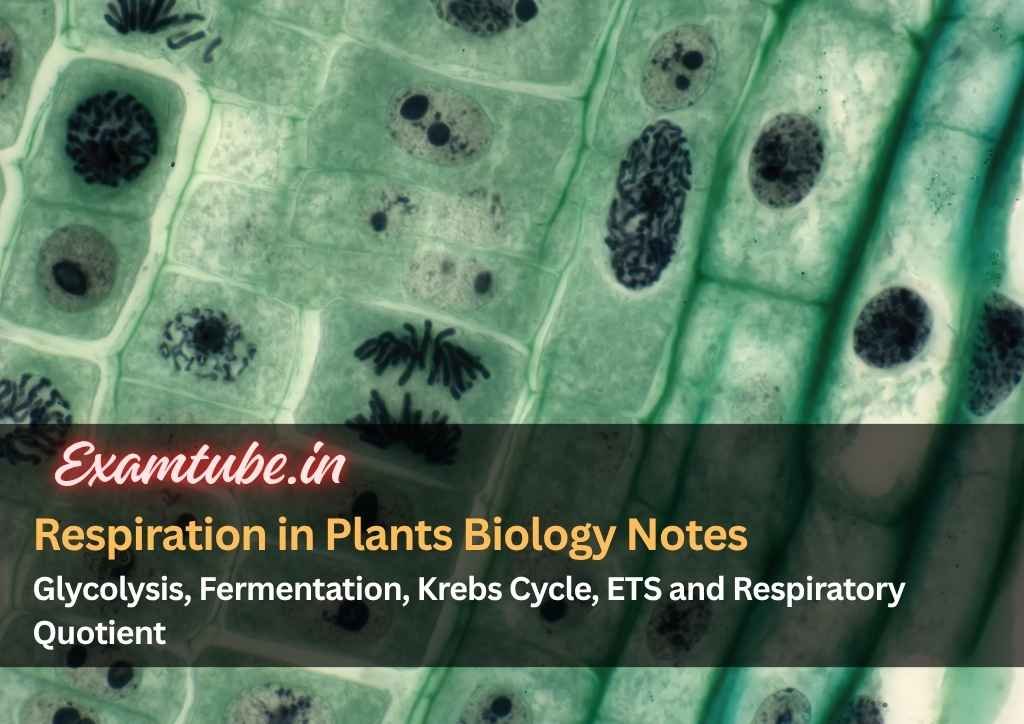
Respiration in Plants Biology Notes - Glycolysis, Fermentation, Krebs Cycle, ETS and Respiratory Quotient
Clear biology notes on cellular respiration in plants, covering glycolysis, fermentation, the Krebs cycle, ETS, and respiratory quotient.
Discussion
Comments
Please log in to join the discussion.
Login to commentNo comments yet. Be the first to start the discussion.