
Practice question
Question
The metaphase-to-anaphase transition is triggered by:
Explanation
The metaphase to anaphase transition is irreversible decision point governed by ubiquitin dependent proteolysis. When every chromosome achieves amphitelic kinetochore-microtubule attachment generating inter-kinetochore tension, spindle assembly checkpoint signaling through MCC production ceases. Dynein-mediated stripping of Mad1-Mad2 from kinetochores and p31comet-TRIP13 catalyzed MCC disassembly liberate coactivator Cdc20, enabling APC/C-Cdc20 ligase activation. Active APC/C polyubiquitinates securin via destruction box motif and cyclin B via D-box for rapid degradation by 26S proteasome. Securin degradation frees separase cysteine protease previously held as pseudosubstrate, while cyclin B destruction reduces CDK1 activity permitting dephosphorylation of mitotic substrates by PP1 and PP2A-B55. Free separase cleaves kleisin subunit Scc1 or Rad21 of cohesin tetramer encircling sister chromatids at centromeres rescued from earlier Wapl-mediated arm removal by Shugoshin-PP2A protection. Opening of cohesin ring dissolves linkage, allowing poleward microtubule pulling forces to separate sisters. Chromatid movement manifests as anaphase A toward poles and anaphase B spindle elongation driven by Eg5 kinesin and cortical dynein. Additional feedback loops involving polo-like kinases, phosphatases and SCF-mediated degradation reinforce irreversibility and protect against premature progression that would compromise genome integrity and viability.
Related blogs
Guides and insights connected to this topic
Tissues in Action Notes - Plant and Animal Tissues, Meristematic, Epithelial, Connective and Muscular
Explore how cells form tissues in plants and animals, covering meristematic, epithelial, connective and muscular types, and why their structures differ.
Cell: The Building Block of Life Notes - Structure, Organelles, Division and Cell Theory
Explore the blog post 'Rest' covering goo time in a concise read.
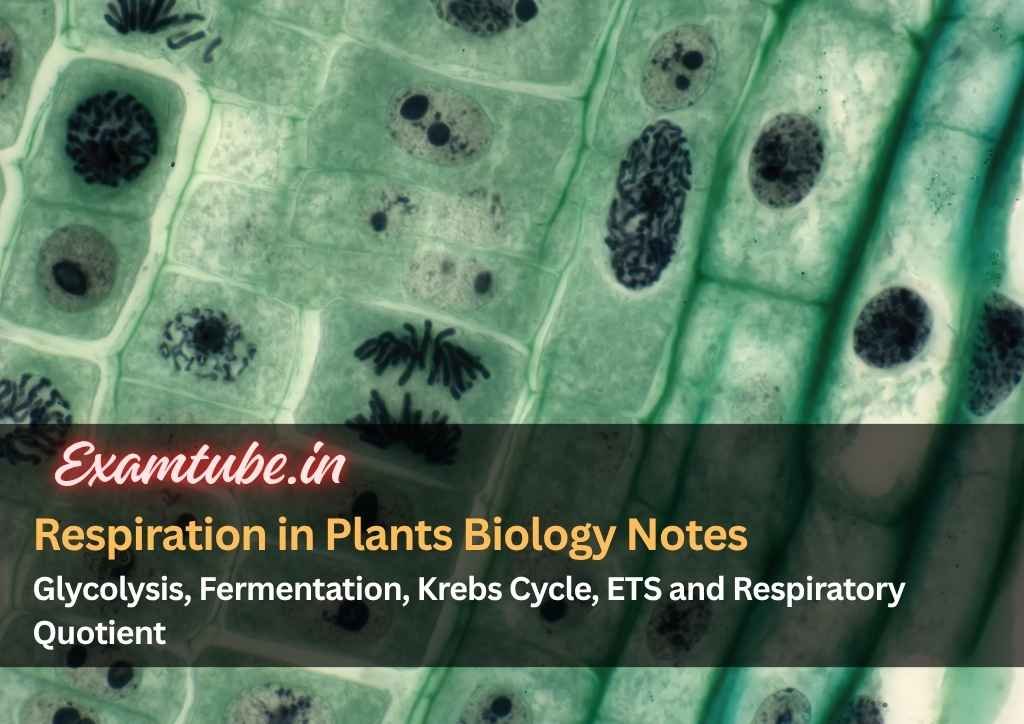
Respiration in Plants Biology Notes - Glycolysis, Fermentation, Krebs Cycle, ETS and Respiratory Quotient
Clear biology notes on cellular respiration in plants, covering glycolysis, fermentation, the Krebs cycle, ETS, and respiratory quotient.
Discussion
Comments
Please log in to join the discussion.
Login to commentNo comments yet. Be the first to start the discussion.