
Practice question
Question
Which of the following is an example of therapeutic monoclonal antibody?
Explanation
Rituximab illustrates first FDA approved chimeric therapeutic monoclonal antibody transforming oncology and autoimmunity management. Engineering used recombinant DNA swapping murine variable regions conferring CD20 specificity onto human IgG1 kappa constant domains, approximately 65 percent human to reduce HAMA human anti-mouse antibody response while retaining effector function. Constant region Fc glycosylated at Asn297 in CH2 domain with fucosylated biantennary glycan necessary for high affinity interaction with FcγRIIIa on natural killer cells and macrophages. Production in Chinese hamster ovary cells under GMP conditions ensures appropriate sialylation and avoids immunogenic alpha-gal. Clinical mechanism following intravenous infusion: Fab domains bind CD20 tetraspanin on mature B cells clustering lipid rafts, transactivating Src family Lyn kinase, triggering calcium flux and caspase dependent apoptosis; Fc recruits C1q initiating classical complement cascade forming membrane attack complex causing complement dependent cytotoxicity, and engages NK cells inducing granzyme B perforin mediated antibody dependent cellular cytotoxicity. Approved 1997 for low-grade follicular non-Hodgkin lymphoma, subsequently for diffuse large B lymphoma with CHOP, rheumatoid arthritis with methotrexate, and granulomatosis with polyangiitis, demonstrating how monoclonal therapeutics provide durable B cell depletion while sparing CD20 negative stem cells and long-lived plasma cells preserving prior immunity.
Related blogs
Guides and insights connected to this topic

How Covishield cause Heart Attack?
IntroductionThe SARS-CoV-2 pandemic has been one of the most significant global health crises in human history. While numerous therapeutic s...
Understanding the Mechanism: How Covishield Vaccine Lead to Blood Clots and Low Platelet Count
Introduction SARS-CoV-2 pandemic is one of the most critical pandemics during human civilization. Several therapeutic strategies for COVID-1...
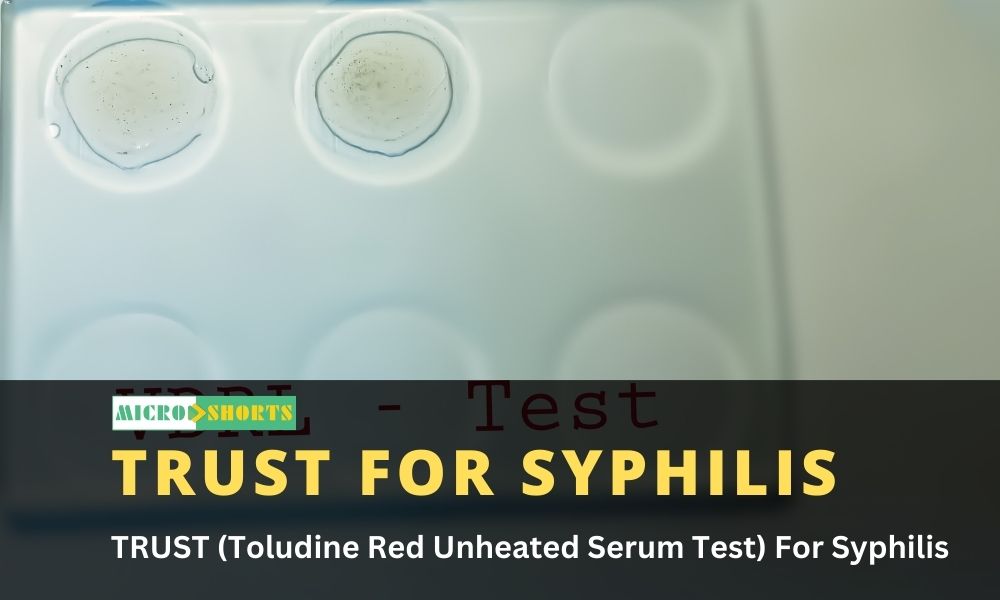
TRUST (Toludine Red Unheated Serum Test) For Syphilis
Principle The TRUST reagent containing modified VDRL antigen and toludine red pigment particles, flocclulate when mixed with sample containi...
Discussion
Comments
Please log in to join the discussion.
Login to commentNo comments yet. Be the first to start the discussion.