
Practice question
Question
What is the condition for the third secondary maximum in a single-slit diffraction pattern?
Explanation
**Convex lens focusing** plane wave into point because lens introduces phase delay proportional to thickness, converting plane wavefront to spherical converging to focal point, property ensures rays parallel to axis meet at focus, spherical aberration minimized for paraxial rays, lensmaker's formula determines focal length. Secondary maxima occur at θ ≈ ((n + (1/2))λ/a) . For the third secondary maximum, n = 3 , θ ≈ (7λ/2a) . Using Δ = d sinθ, y = n λ D/d, a sinθ = n λ, I = I₀ cos²θ, n = c/v, sinC = 1/n, λ' = λ/n and A = 2a cos(φ/2), calculation gives θ = (7λ/2a),
Related blogs
Guides and insights connected to this topic

Anatomy of Flowering Plants Biology Notes - Meristematic and Permanent Tissues, Tissue Systems, Secondary Growth and Dicot Monocot Anatomy
Notes on plant anatomy: meristematic and permanent tissues, apical, intercalary and lateral meristems, tissue systems, secondary growth, and...
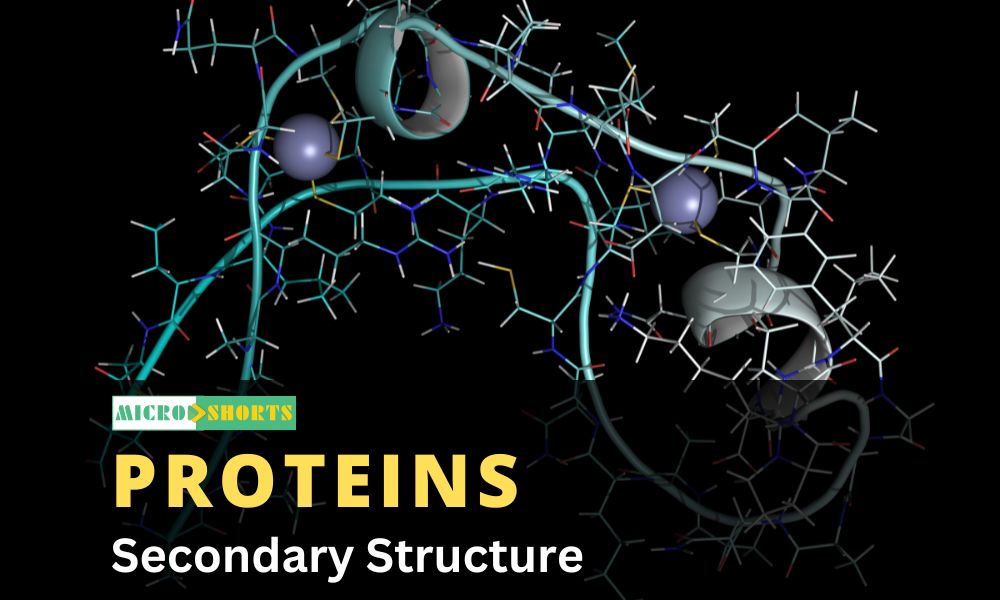
Secondary Structure of Proteins
The nature of the bonds in the peptide backbone plays an important role here. Within each amino acid residue are two bonds with reasonably f...

Microorganisms in extreme temperature
Psychrophile Definition and CharacteristicsPsychrophiles, literally meaning cold-loving, are organisms adapted to growth at low tempera...
Discussion
Comments
Please log in to join the discussion.
Login to commentNo comments yet. Be the first to start the discussion.