
Practice question
Question
Who proposed the 10% energy law in ecological pyramids?
Explanation
Raymond Lindeman proposed the trophic-dynamic framework from which the approximate ten-percent transfer rule is commonly derived. His 1942 work quantified how production declines across trophic levels because organisms fail to consume or assimilate all available material and expend assimilated energy in respiration. The rule is a teaching approximation rather than a fixed constant; measured efficiencies vary widely. The option’s spelling “Lindemann” is nonstandard, but it clearly refers to Lindeman and does not change the intended attribution. Standardizing by area and, for rates, by time is essential; otherwise ecosystems of different size, depth, or sampling duration cannot be compared meaningfully. Turnover explains many apparent paradoxes: a small, fast-renewing stock can support a larger consumer stock without reversing the direction of energy transfer. Energy and matter should not be conflated: nutrients can cycle among levels, but respiratory heat cannot be recycled into chemically useful energy by the community. Pyramid shape is an accounting result with biological causes, including body-size distributions, tissue longevity, consumption, assimilation, respiration, and population turnover.
Related blogs
Guides and insights connected to this topic
Earth as a System: Energy Matter and Life Notes - Geosphere, Hydrosphere, Atmosphere, Biosphere and Greenhouse Effect
Explore how the Sun, Earth's interior heat and chemical reactions drive energy and matter through the geosphere, hydrosphere, atmosphere and biosphere.
Sources of Energy Notes - Conventional vs Non-Conventional, Solar, Nuclear and Environmental Impact
Explore class 10 notes on energy sources, comparing conventional and non‑conventional types, including solar and nuclear power and their environmental impact.
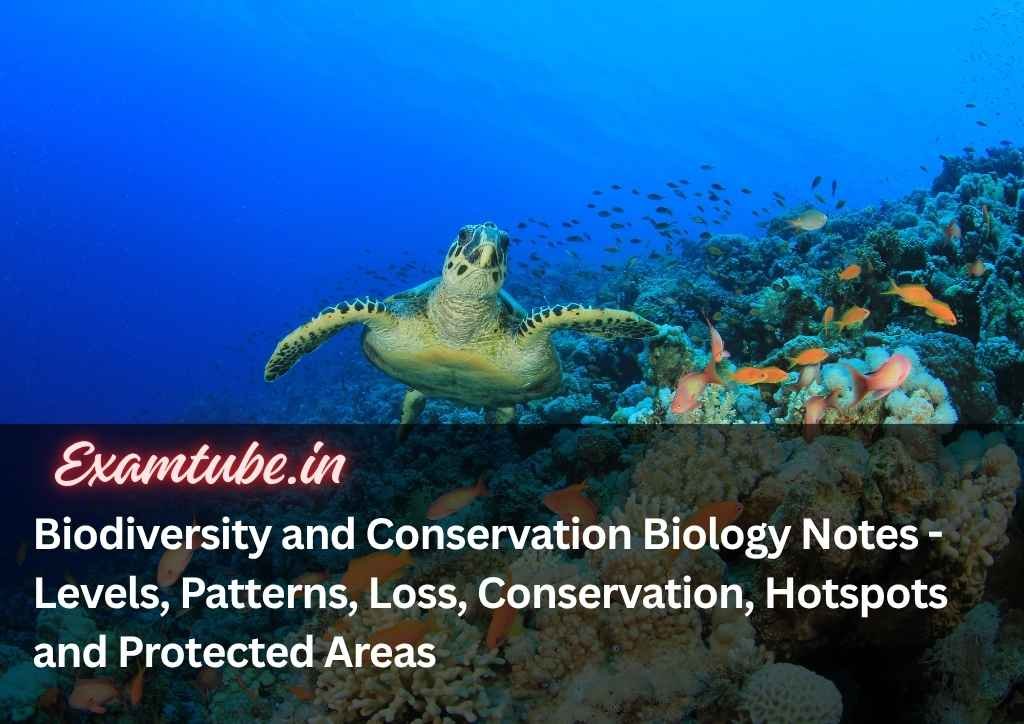
Biodiversity and Conservation Biology Notes - Levels, Patterns, Loss, Conservation, Hotspots and Protected Areas
Learn about biodiversity levels, patterns, loss, conservation strategies, hotspots and protected areas, with examples from India.
Discussion
Comments
Please log in to join the discussion.
Login to commentNo comments yet. Be the first to start the discussion.