
Practice question
Question
Which of the following is not membrane-bound?
Explanation
Membrane-bound organelles derive from endomembrane system involving lipid bilayers enclosing aqueous lumen, including nucleus surrounded by double membrane perforated by pores, mitochondria with outer and inner membranes supporting oxidative phosphorylation, endoplasmic reticulum network, Golgi stacks and lysosomes that are acidic hydrolase containing vesicles. Ribosomes represent exception being ribonucleoprotein particles approximately twenty five to thirty nanometers composed of ribosomal RNA and seventy to eighty proteins without delimiting membrane. Free cytosolic ribosomes translate cytosolic and nuclear proteins, rough ER bound ribosomes translate secretory pathway proteins after SRP-dependent targeting. In mitochondria and plastids separate bacterial-type ribosomes exist. Their lack of membrane explains sensitivity to high salt and magnesium depletion rather than detergents, purification through ultracentrifugation producing polysome profiles, and rapid assembly-disassembly during translation cycle. Histochemistry shows no lipid bilayer, electron microscopy reveals electron dense granules. Distinguishing membranous vs nonmembranous compartments guides fractionation protocols and rationalizes differential drug sensitivity, for instance cycloheximide inhibits eukaryotic ribosomes irrespective of membrane association.
Related blogs
Guides and insights connected to this topic
Cell: The Building Block of Life Notes - Structure, Organelles, Division and Cell Theory
Explore the blog post 'Rest' covering goo time in a concise read.

Biomolecules Biology Notes - Chemical Composition, Amino Acids, Lipids, Proteins, Nucleic Acids, Enzymes and Cofactors
Detailed biology notes on biomolecules. Learn chemical tissue analysis, amino acids, proteins, lipids, nucleic acids, and enzyme action.
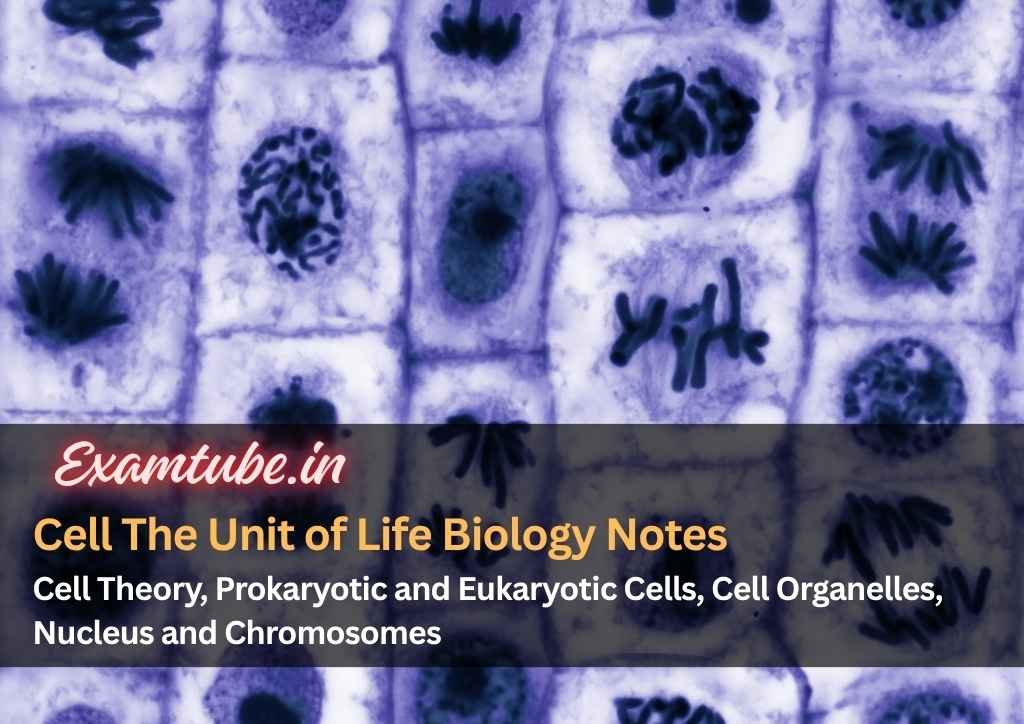
Cell The Unit of Life Biology Notes - Cell Theory, Prokaryotic and Eukaryotic Cells, Cell Organelles, Nucleus and Chromosomes
Notes on Cell: The Unit of Life covering cell theory, prokaryotic and eukaryotic cells, cell organelles, the nucleus and chromosomes.

Discussion
Comments
Please log in to join the discussion.
Login to commentNo comments yet. Be the first to start the discussion.