
Practice question
Question
Which of the following is a consequence of the Second Law of Thermodynamics?
Explanation
**Quasi-static process** infinitely slow, system always near equilibrium, reversible, can be represented as continuous path on P-V diagram, non-quasi-static rapid process non-equilibrium, work W = ∫ P_ext dV, for quasi-static P_ext = P_system, work = ∫ P dV, zeroth law ensures temperature defined throughout quasi-static. The Second Law implies that heat engines cannot convert all absorbed heat into work (Kelvin-Planck), limiting efficiency to less than 100%. This is a fundamental constraint on energy conversion processes. Using first law ΔU = Q - W, W = ∫ P dV, isobaric W = P ΔV, isothermal W = n R T ln(V₂/V₁), adiabatic P V^γ = const
Related blogs
Guides and insights connected to this topic

Anatomy of Flowering Plants Biology Notes - Meristematic and Permanent Tissues, Tissue Systems, Secondary Growth and Dicot Monocot Anatomy
Notes on plant anatomy: meristematic and permanent tissues, apical, intercalary and lateral meristems, tissue systems, secondary growth, and...

Zoonotic Spillover in Bats: Causes, Consequences, and Future Preparedness
Bats: General Characteristics and Classification Bats are small mammals capable of true sustained flight. They belong to the second-largest...
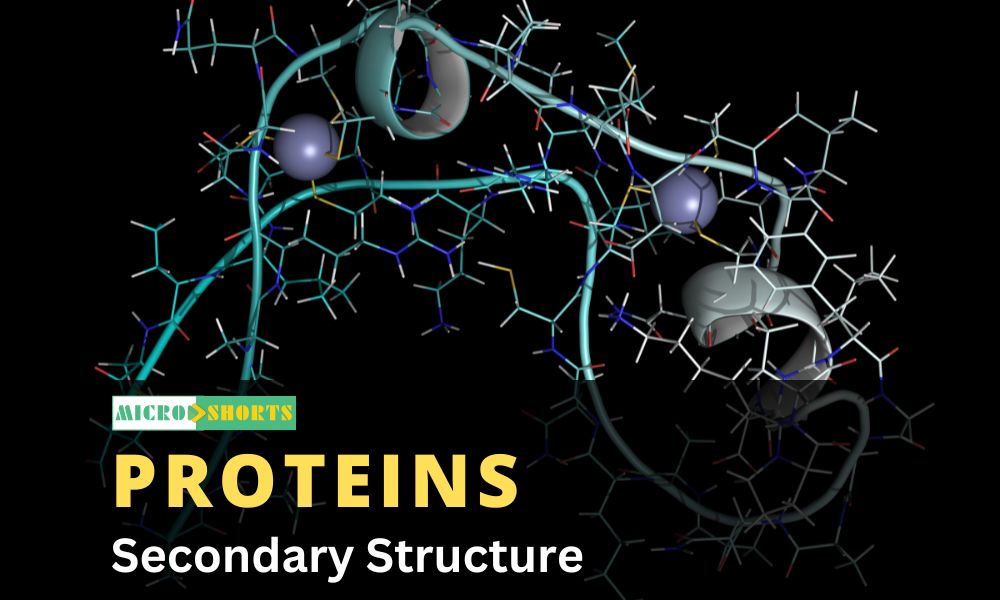
Secondary Structure of Proteins
The nature of the bonds in the peptide backbone plays an important role here. Within each amino acid residue are two bonds with reasonably f...
Discussion
Comments
Please log in to join the discussion.
Login to commentNo comments yet. Be the first to start the discussion.