
Practice question
Question
What is the effect on an ideal transformer’s secondary voltage if the number of turns in the secondary
coil is halved?
Explanation
**Current relative to voltage** in resistor in phase, φ=0°, power factor cos φ=1, maximum power, unlike inductor/capacitor where average power zero due to 90° phase shift, explaining why resistor heats while pure L/C does not. In an ideal transformer, (V_s/V_p) = (N_s/N_p) . If the number of secondary turns ( N_s ) is halved, the secondary voltage ( V_s ) becomes half its original value, assuming primary voltage ( V_p ) remains constant. Applying X_L = ωL, X_C = 1/ωC, Z = √(R² + (X_L - X_C)²), I_rms = V_rms/Z, P = V_rms I_rms cosφ, V_s/V_p = N_s/N_p, calculation gives It halves, consistent with phasor
Related blogs
Guides and insights connected to this topic

Anatomy of Flowering Plants Biology Notes - Meristematic and Permanent Tissues, Tissue Systems, Secondary Growth and Dicot Monocot Anatomy
Notes on plant anatomy: meristematic and permanent tissues, apical, intercalary and lateral meristems, tissue systems, secondary growth, and...

Electrophoretic separation of protein by SDS-PAGE
IntroductionElectrophoresis is the process of migration of charged molecules in response to an electric field. The rate of migration depends...
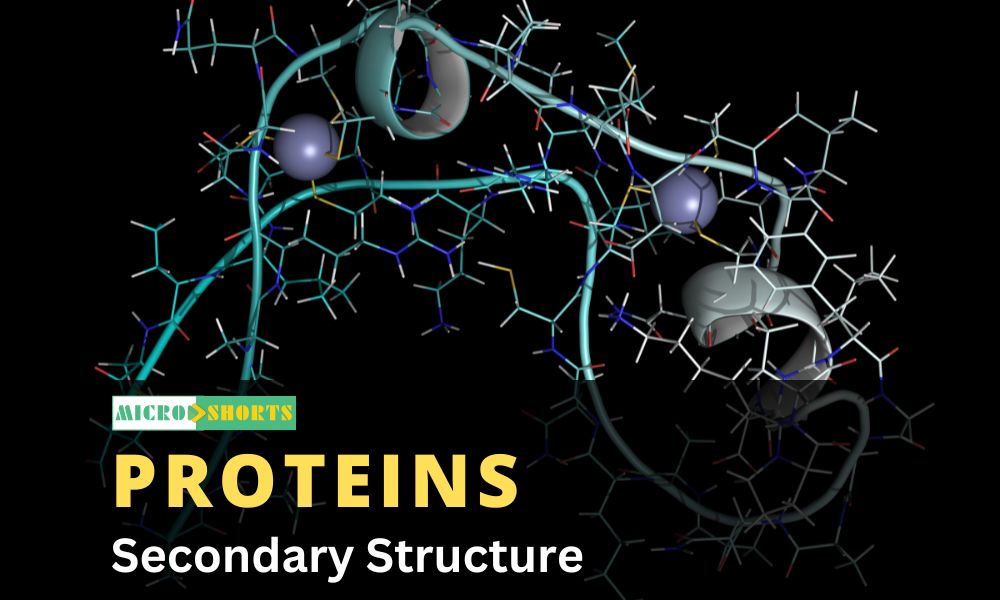
Secondary Structure of Proteins
The nature of the bonds in the peptide backbone plays an important role here. Within each amino acid residue are two bonds with reasonably f...
Discussion
Comments
Please log in to join the discussion.
Login to commentNo comments yet. Be the first to start the discussion.