
Practice question
Question
Three capacitors \( 6 \, \text{pF} \), \( 12 \, \text{pF} \), and \( 4 \, \text{pF} \) are in series.
What is the equivalent capacitance?
Explanation
**Parallel combination** has same voltage V across each, charges Q_i = C_i V, total Q = Σ Q_i = V Σ C_i, so C_eq = Σ C_i, sum of capacitances. For five 10 μF in series, 1/C=5/10=0.5, C_eq=2 μF, much smaller than individual, while parallel would be 50 μF. (1/C) = (1/6) + (1/12) + (1/4) = (2/12) + (1/12) + (3/12) = (6/12) = 0.5 . C = 2 pF . Using V = kQ/r, U = k q₁q₂/r, E = -dV/dr, C = ε₀A/d, 1/C_eq series, C_eq = ΣC parallel, U = ½ C V² and common potential V = Q_total/C_total, result 2 pF follows, reflecting potential-capacitance relations.
Related blogs
Guides and insights connected to this topic
Metals and Non-metals Notes - Physical Chemical Properties, Ionic Compounds, Reactivity Series and Corrosion
Explore the key physical and chemical traits of metals and non‑metals, including lustre, hardness, malleability, ductility, conductivity and corrosion.

Soil Formation (Pedogenesis)- Factors, Process/Steps, Examples
Soil Formation Definition Soil formation or pedogenesis is the process of evolution of soil under the influence of various physical, bi...
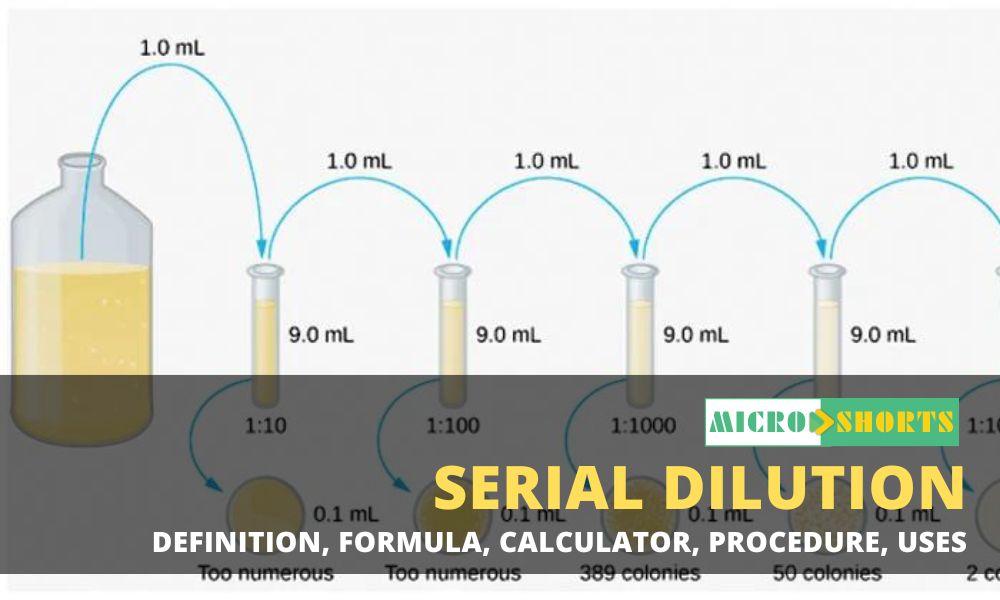
Serial Dilution- Definition, Formula, Calculator, Procedure, Uses
Serial dilution, as the name suggests, is a series of sequential dilutions that are performed to convert a dense solution into a more usable...
Discussion
Comments
Please log in to join the discussion.
Login to commentNo comments yet. Be the first to start the discussion.