
Practice question
Question
The rapid turnover of actin filaments in vivo compared to in vitro is primarily due to:
Explanation
Pure actin solution polymerized exhibits slow turnover due to low off rates 0.2 to 1 per second and minimal nucleation. In living cell turnover accelerated 50 to 100 fold evidenced by FRAP recovery half time 10 to 30 seconds for cortical actin. Acceleration attributed to collaborative action of cofilin and profilin. Cofilin severs ADP actin filaments increasing number of pointed ends depolymerizing at 10 per second vs 0.8 spontaneous and also increases off rate at pointed ends. Profilin ADP G actin complex undergoes rapid nucleotide exchange rate constant increase 1000 fold from 0.02 to 20 per second due to opening actin nucleotide cleft, forming profilin ATP actin that adds exclusively to barbed ends at diffusion limited rate. Delivery to FH1 domains of formins and Ena VASP concentrates monomers locally. Additional proteins such as CapZ, twinfilin and Srv2 CAP synergize. Elevated monomer alone would shift equilibrium but not accelerate dynamics, excess ATP hydrolysis uncoupled wasteful, low ionic strength inhibits polymerization by reducing charge shielding. Hence presence of cofilin profilin system explains rapid in vivo turnover essential for migration.
Related blogs
Guides and insights connected to this topic

Prokaryotic Cytoskeleton and Its Functions
Prokaryotic Cytoskeleton and Its FunctionsProteins in prokaryotic cells play roles similar to those of the cytoskeleton in eukaryotic cells....
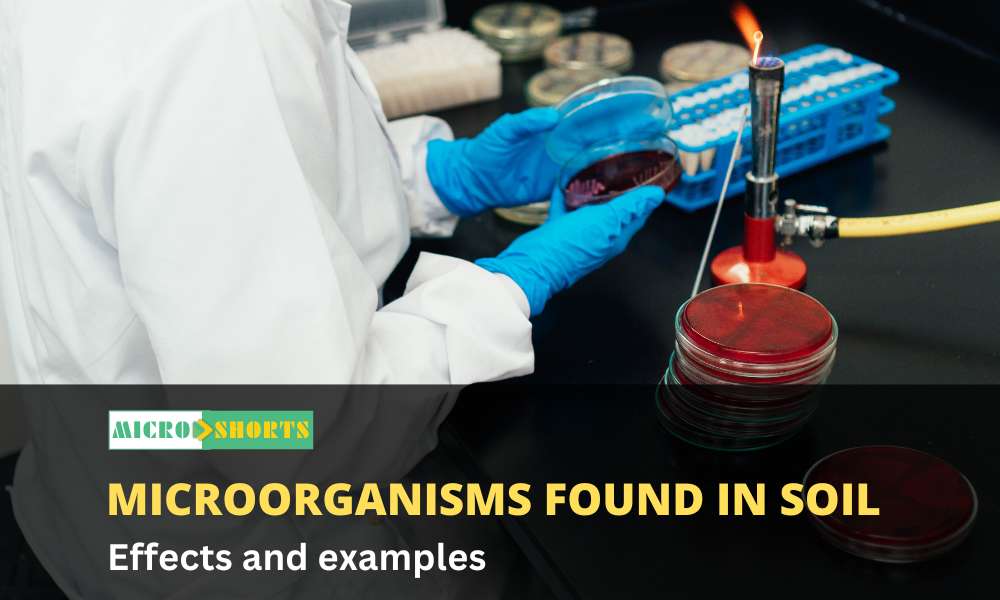
Microorganisms found in soil with effects and examples
Soil microbiology is a branch of soil science concerned with soil-inhabiting microorganisms, their functions, and activities within the...
Experiment 16: Flash Cards / Models / Specimens Showing Examples of Homologous and Analogous Organs
AIM To study homology and analogy with the help of models/charts of animals and models/charts/specimens of plants. PRINCIPLE Homologous organs are functionally dissimilar but anatomically or structurally similar. Different modes of life have modified the organs to enable survival...

Discussion
Comments
Please log in to join the discussion.
Login to commentNo comments yet. Be the first to start the discussion.