
Practice question
Question
An organism possessing two identical alleles at a locus is called
Explanation
An organism possessing two identical alleles at a locus is termed homozygous, denoted TT for tall homozygous or tt for dwarf homozygous. Homozygotes breed true, producing gametes carrying single allelic type because segregation yields uniform content. Homozygosity increases through selfing, inbreeding or selection and exposes recessive alleles phenotypically, important for detecting deleterious mutations. Heterozygous carries divergent alleles, hemizygous describes single copy state in XY males for X-linked genes, polyploid refers to whole set number, distinct from allelic identity. Mastery ensures accurate interpretation of monohybrid and dihybrid progeny arrays, distinguishing dominance interactions from epistasis or linkage effects.
Related blogs
Guides and insights connected to this topic
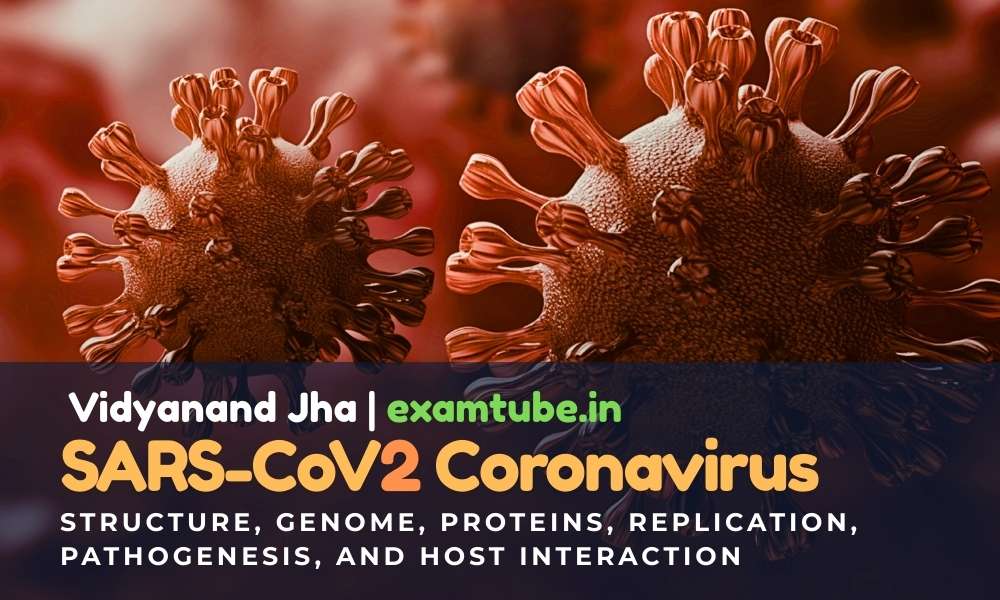
SARS-CoV-2 Coronavirus: Structure, Genome, Proteins, Replication, Pathogenesis, and Host Interaction
Coronavirus Overview Coronaviruses (CoVs) are enveloped viruses (surrounded by a lipid membrane derived from host cells), belonging to the s...

Coronavirus Structure, Genome, Replication, Symptoms, Pathogenesis, and Prevention
Structure of Coronavirus Coronaviruses (enveloped RNA viruses) fall in the virus family Coronaviridae, order Nidovirales. They are enveloped...

Cucumber Mosaic Virus (CMV): Structure, Genome, Symptoms, Disease Cycle and Management
Cucumber Mosaic Virus (CMV): Introduction and Importance Cucumber Mosaic Virus (CMV) (plant-infecting RNA virus) is one of the most economic...