
Practice question
Question
In phase contrast microscopy, what is used to generate a hollow cone of light?
Explanation
Phase contrast requires annular illumination to separate background light from light scattered by the specimen. A phase annulus, a circular slit located in the condenser front focal plane, produces a hollow cone of rays focused on the sample. The direct hollow cone and the diffracted rays from cellular structures travel different paths. At the objective, a complementary phase plate with a ring retards the direct light by quarter wavelength. Their interference converts small phase differences caused by refractive index variations into amplitude contrast, enabling unstained cells to be visualized with excellent definition without fixation.
Related blogs
Guides and insights connected to this topic

SARS-CoV-2 Coronavirus: Structure, Genome, Proteins, Replication, Pathogenesis, and Host Interaction
Coronavirus Overview Coronaviruses (CoVs) are enveloped viruses (surrounded by a lipid membrane derived from host cells), belonging to the s...

Coronavirus Structure, Genome, Replication, Symptoms, Pathogenesis, and Prevention
Structure of Coronavirus Coronaviruses (enveloped RNA viruses) fall in the virus family Coronaviridae, order Nidovirales. They are enveloped...
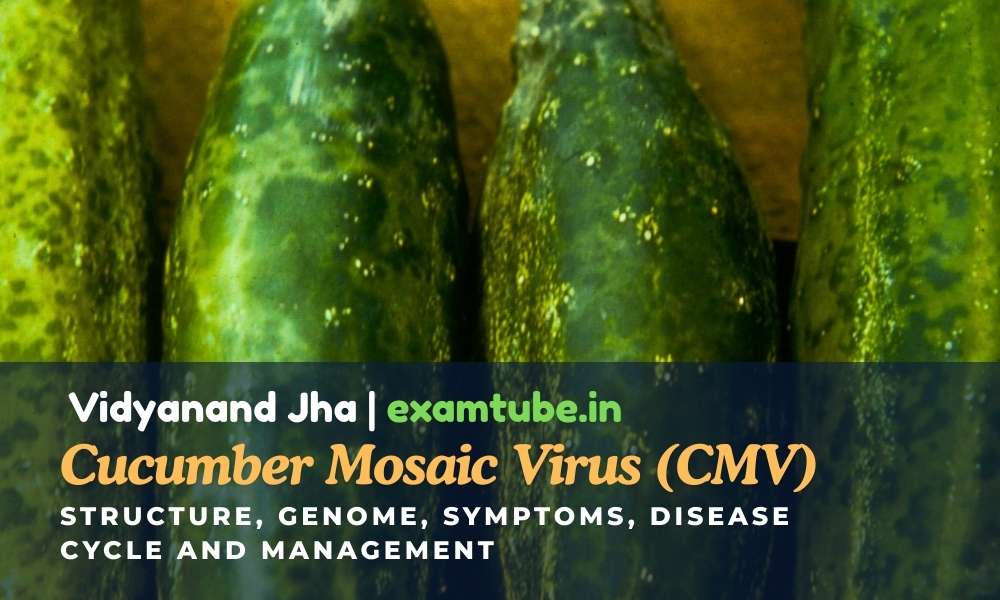
Cucumber Mosaic Virus (CMV): Structure, Genome, Symptoms, Disease Cycle and Management
Cucumber Mosaic Virus (CMV): Introduction and Importance Cucumber Mosaic Virus (CMV) (plant-infecting RNA virus) is one of the most economic...