
Practice question
Question
Which value of Simpson’s Index (D) shows maximum diversity?
Explanation
Using Simpson’s dominance definition, D = Σpᵢ², diversity is greatest when D is smallest. The index represents the probability that two randomly sampled individuals belong to the same species. As richness and evenness increase, that probability declines because individuals are spread among many taxa. A value of zero is the theoretical lower limit and therefore represents maximum diversity among the listed values. In a real finite community containing individuals, D ordinarily remains above zero; it approaches zero as the effective number of equally abundant species becomes very large. A value of one indicates complete dominance by a single species. This direction reverses for the complementary Gini–Simpson index, 1 − D, where values near one indicate high diversity, and for the reciprocal 1/D, where larger numbers indicate more effective species. The formula must therefore accompany the name “Simpson’s index.” The keyed zero assumes the dominance convention consistently used in these rows. Interpreting the scale probabilistically prevents memorization errors: low same-species draw probability means high diversity, whereas high same-species draw probability means low diversity.
Related blogs
Guides and insights connected to this topic

SARS-CoV-2 Coronavirus: Structure, Genome, Proteins, Replication, Pathogenesis, and Host Interaction
Coronavirus Overview Coronaviruses (CoVs) are enveloped viruses (surrounded by a lipid membrane derived from host cells), belonging to the s...

Cucumber Mosaic Virus (CMV): Structure, Genome, Symptoms, Disease Cycle and Management
Cucumber Mosaic Virus (CMV): Introduction and Importance Cucumber Mosaic Virus (CMV) (plant-infecting RNA virus) is one of the most economic...
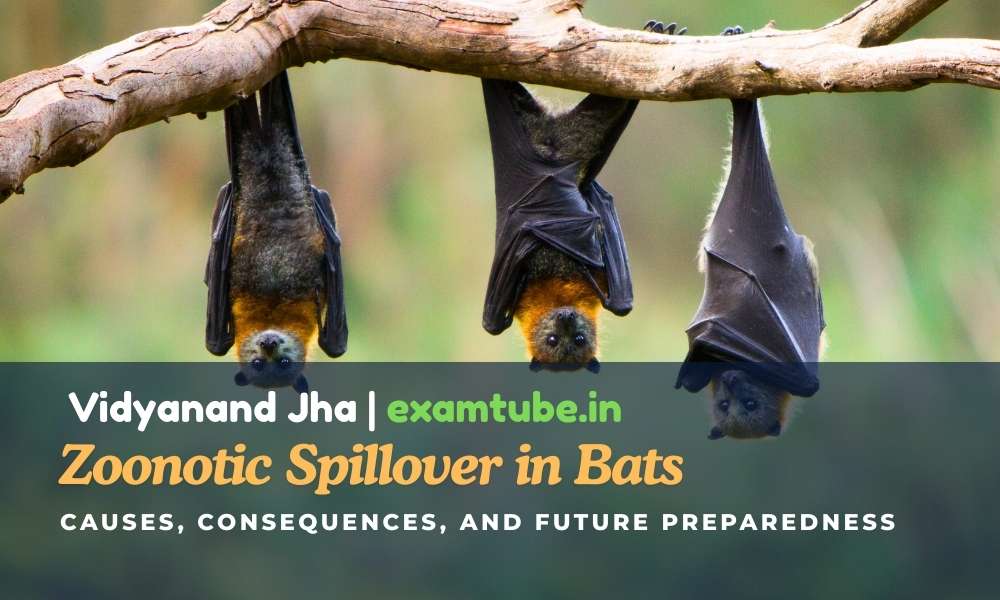
Zoonotic Spillover in Bats: Causes, Consequences, and Future Preparedness
Bats: General Characteristics and Classification Bats are small mammals capable of true sustained flight. They belong to the second-largest...