
Practice question
Question
Which diversity measures variation in species between two ecosystems?
Explanation
Beta diversity measures change in species composition between habitats, communities, or ecosystems. If two ecosystems contain nearly identical species, beta diversity is low even when each has many species. If their species lists overlap little, beta diversity is high because replacement or turnover is substantial. It can be quantified using dissimilarity indices or related to spatial scales multiplicatively as β = γ/α, where gamma is regional diversity and alpha is average local diversity. Additive partitioning may instead use β = γ − α, so the definition and metric should always be stated. Alpha diversity describes richness and abundance structure within one local habitat, while gamma diversity is the pooled diversity across the whole region. “Local diversity” is essentially alpha rather than a between-ecosystem measure. Beta patterns arise from environmental filtering, dispersal limitation, geographic distance, disturbance, and historical differences. Separating beta into turnover and nestedness can be informative: one site may replace another’s species, or a poorer site may simply contain a subset of a richer one. The core idea is compositional variation across space, not merely the difference in raw species counts.
Related blogs
Guides and insights connected to this topic

SARS-CoV-2 Coronavirus: Structure, Genome, Proteins, Replication, Pathogenesis, and Host Interaction
Coronavirus Overview Coronaviruses (CoVs) are enveloped viruses (surrounded by a lipid membrane derived from host cells), belonging to the s...

Cucumber Mosaic Virus (CMV): Structure, Genome, Symptoms, Disease Cycle and Management
Cucumber Mosaic Virus (CMV): Introduction and Importance Cucumber Mosaic Virus (CMV) (plant-infecting RNA virus) is one of the most economic...
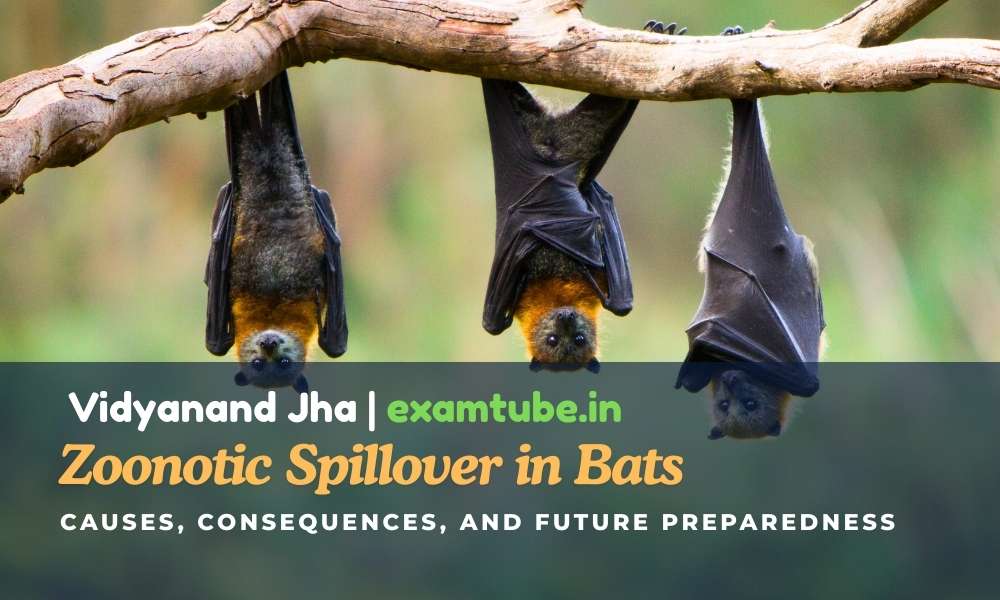
Zoonotic Spillover in Bats: Causes, Consequences, and Future Preparedness
Bats: General Characteristics and Classification Bats are small mammals capable of true sustained flight. They belong to the second-largest...