
Practice question
Question
In r-strategists, population size is usually:
Explanation
Populations described as r-selected often fluctuate widely. Their rapid reproduction permits abrupt increases after rain, disturbance, or release from enemies, but short-lived resources and density-independent events can cause equally abrupt declines. Such populations need not cycle regularly; variable captures their tendency to track unpredictable opportunities rather than remain close to a stable carrying capacity. A survivorship curve is built from a cohort life table by plotting the proportion alive at each age. Type I concentrates mortality late, Type II approximates a constant hazard, and Type III concentrates mortality early. These are descriptive models, so a species may shift between them when predators, care, climate, or habitat quality changes. Reading the terms biologically, rather than memorizing labels, shows how individual survival and reproduction scale up to population change. Ecological predictions remain conditional on the stated environment, because changing resources, mortality, or interactions can alter the observed demographic pattern. This interpretation connects individual-level processes with measurable changes in survival, reproduction, recruitment, or abundance across the population.
Related blogs
Guides and insights connected to this topic

SARS-CoV-2 Coronavirus: Structure, Genome, Proteins, Replication, Pathogenesis, and Host Interaction
Coronavirus Overview Coronaviruses (CoVs) are enveloped viruses (surrounded by a lipid membrane derived from host cells), belonging to the s...

Coronavirus Structure, Genome, Replication, Symptoms, Pathogenesis, and Prevention
Structure of Coronavirus Coronaviruses (enveloped RNA viruses) fall in the virus family Coronaviridae, order Nidovirales. They are enveloped...
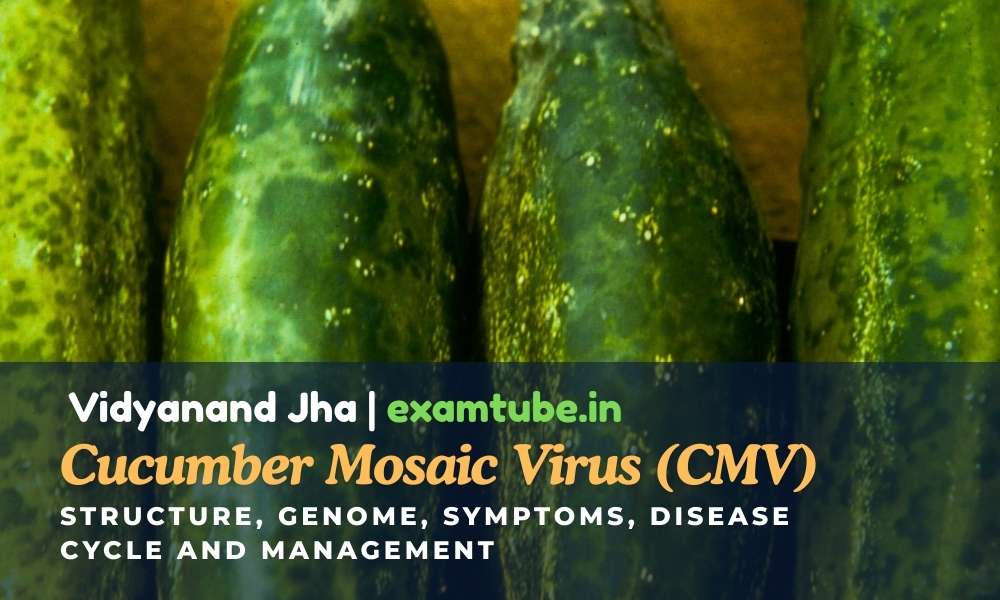
Cucumber Mosaic Virus (CMV): Structure, Genome, Symptoms, Disease Cycle and Management
Cucumber Mosaic Virus (CMV): Introduction and Importance Cucumber Mosaic Virus (CMV) (plant-infecting RNA virus) is one of the most economic...