
Practice question
Question
Which term refers to gradual replacement of one community by another?
Explanation
Ecological succession is the directional change in community composition and structure through time, often involving gradual replacement of one group of species by another. A disturbance or newly exposed habitat creates opportunities for colonists. Those organisms alter resource availability, soil, shade, moisture, or interactions, influencing which species establish next. Replacement can proceed through facilitation, tolerance, inhibition, or combinations of these processes. Succession differs from evolution, which is heritable change in populations across generations; species composition can shift without genetic evolution. Zonation is a spatial pattern of communities along an environmental gradient, such as elevation or tidal height, rather than a temporal sequence. Competition can drive replacement but is only one mechanism within succession. “Gradual” should not be read as uniformly slow: fires, storms, invasions, and episodic recruitment can produce abrupt transitions. Nor must succession end in a single fixed climax. The core concept is temporal turnover in communities as organisms, environment, and disturbance history interact.
Related blogs
Guides and insights connected to this topic

SARS-CoV-2 Coronavirus: Structure, Genome, Proteins, Replication, Pathogenesis, and Host Interaction
Coronavirus Overview Coronaviruses (CoVs) are enveloped viruses (surrounded by a lipid membrane derived from host cells), belonging to the s...

Cucumber Mosaic Virus (CMV): Structure, Genome, Symptoms, Disease Cycle and Management
Cucumber Mosaic Virus (CMV): Introduction and Importance Cucumber Mosaic Virus (CMV) (plant-infecting RNA virus) is one of the most economic...
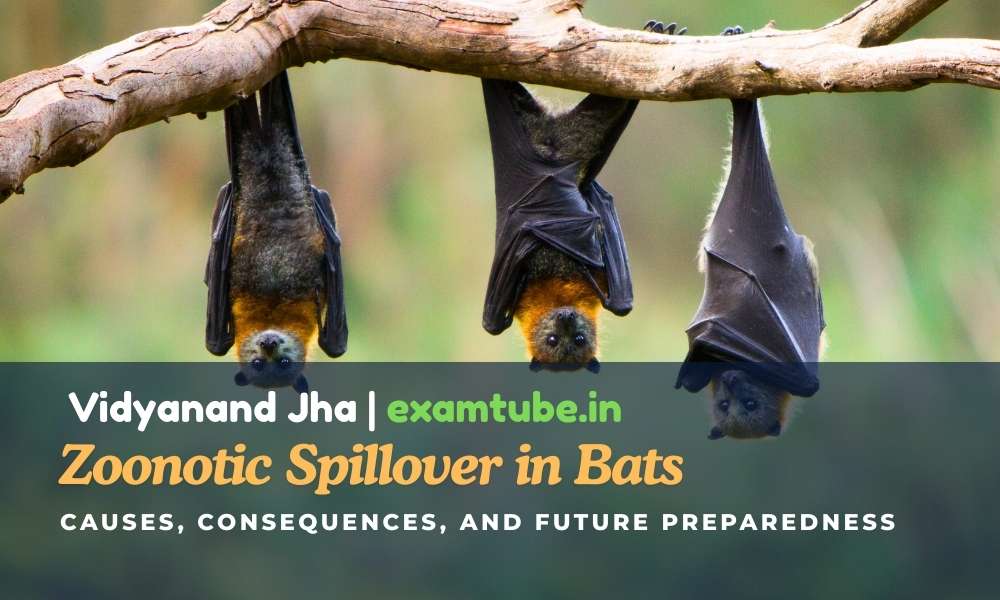
Zoonotic Spillover in Bats: Causes, Consequences, and Future Preparedness
Bats: General Characteristics and Classification Bats are small mammals capable of true sustained flight. They belong to the second-largest...