
Practice question
Question
Which of the following is a community-level measure of diversity?
Explanation
Gamma diversity is the total diversity of a region or landscape containing multiple local communities. It is therefore a regional-level measure, not a community-level one. Within a single community, alpha diversity can be described through species richness, evenness, or composite indices such as Shannon or Simpson diversity. Both “evenness” and “species richness” among the alternatives are legitimate community-level attributes: richness counts species, whereas evenness describes how equally individuals are distributed among them. Beta diversity then captures turnover between communities, and gamma diversity pools diversity across the broader region. The keyed choice D conflicts with this accepted spatial hierarchy and also fails the stem because gamma is explicitly larger-scale. This is a demonstrable key mismatch, compounded by the presence of more than one plausible community-level alternative. The scientifically sound correction would require rewriting the stem—for example, asking for a regional measure, which would make gamma unambiguous—or replacing the choices with alpha, beta, gamma, and another scale. The workbook key should remain untouched as instructed, but learners should not internalize gamma diversity as a within-community metric.
Related blogs
Guides and insights connected to this topic

SARS-CoV-2 Coronavirus: Structure, Genome, Proteins, Replication, Pathogenesis, and Host Interaction
Coronavirus Overview Coronaviruses (CoVs) are enveloped viruses (surrounded by a lipid membrane derived from host cells), belonging to the s...

Cucumber Mosaic Virus (CMV): Structure, Genome, Symptoms, Disease Cycle and Management
Cucumber Mosaic Virus (CMV): Introduction and Importance Cucumber Mosaic Virus (CMV) (plant-infecting RNA virus) is one of the most economic...
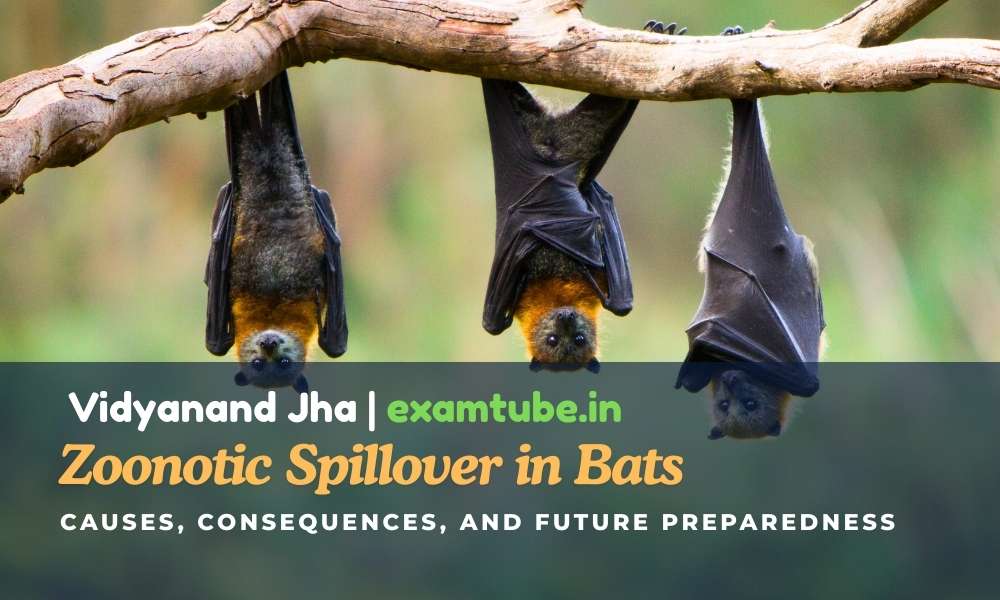
Zoonotic Spillover in Bats: Causes, Consequences, and Future Preparedness
Bats: General Characteristics and Classification Bats are small mammals capable of true sustained flight. They belong to the second-largest...