
Practice question
Question
Which interaction is denoted as (+, -) in ecological terms?
Explanation
Parasitism is represented by the sign pair (+, −) because the parasite gains resources or reproductive success while the host suffers reduced fitness. A tapeworm obtains nutrients from its vertebrate host, for example, while imposing costs through tissue damage, nutrient loss, immune activation, or reduced survival and fecundity. The signs describe average effects on each participant relative to its performance without the interaction; they do not imply that every encounter has an identical outcome. Predation and herbivory are also broadly positive–negative consumer interactions, but parasitism usually involves a prolonged association in which the parasite exploits one or a few hosts and ordinarily does not kill them immediately. Mutualism is (+, +), commensalism is (+, 0), and neutralism is conventionally (0, 0). These categories are useful idealizations: context can shift an interaction along a continuum, as environmental conditions may make a normally weak cost substantial. The defining logic remains a fitness benefit to one species coupled with a measurable fitness cost to the other.
Related blogs
Guides and insights connected to this topic

SARS-CoV-2 Coronavirus: Structure, Genome, Proteins, Replication, Pathogenesis, and Host Interaction
Coronavirus Overview Coronaviruses (CoVs) are enveloped viruses (surrounded by a lipid membrane derived from host cells), belonging to the s...

Cucumber Mosaic Virus (CMV): Structure, Genome, Symptoms, Disease Cycle and Management
Cucumber Mosaic Virus (CMV): Introduction and Importance Cucumber Mosaic Virus (CMV) (plant-infecting RNA virus) is one of the most economic...
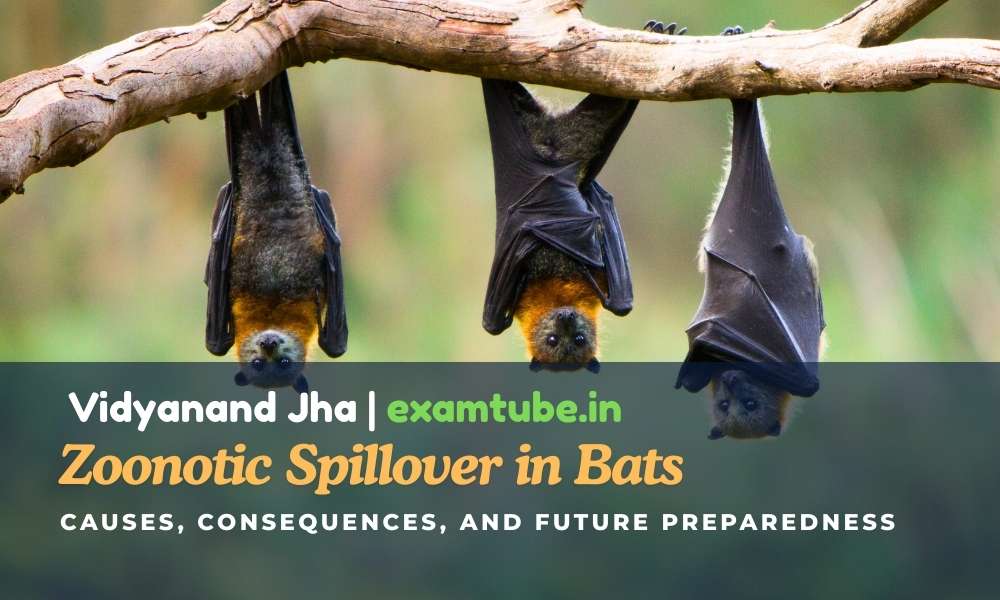
Zoonotic Spillover in Bats: Causes, Consequences, and Future Preparedness
Bats: General Characteristics and Classification Bats are small mammals capable of true sustained flight. They belong to the second-largest...