
Practice question
Question
Which graph curve type would favor semelparity?
Explanation
Under the graphical convention used in this life-history model, a concave-upward relationship favors concentrating reproductive effort into a single event, hence semelparity. Curvature determines whether fitness gains accelerate as more resources are committed. If a large one-time allocation yields disproportionately greater fecundity than several smaller allocations, preserving resources for another season is less advantageous. Selection can favor a large terminal effort when future survival is poor or when concentrating resources yields accelerating fecundity gains. Repeated breeding is favored when adults commonly survive and spreading reproduction buffers bad years. These predictions are conditional; a familiar species example illustrates a principle but does not define it for every environment. This reasoning also explains why field observations may be approximate even when the underlying textbook classification is useful. This interpretation connects individual-level processes with measurable changes in survival, reproduction, recruitment, or abundance across the population. Field evidence should therefore be compared with the model assumptions before extending the conclusion to every species, habitat, or time period.
Related blogs
Guides and insights connected to this topic

SARS-CoV-2 Coronavirus: Structure, Genome, Proteins, Replication, Pathogenesis, and Host Interaction
Coronavirus Overview Coronaviruses (CoVs) are enveloped viruses (surrounded by a lipid membrane derived from host cells), belonging to the s...

Coronavirus Structure, Genome, Replication, Symptoms, Pathogenesis, and Prevention
Structure of Coronavirus Coronaviruses (enveloped RNA viruses) fall in the virus family Coronaviridae, order Nidovirales. They are enveloped...
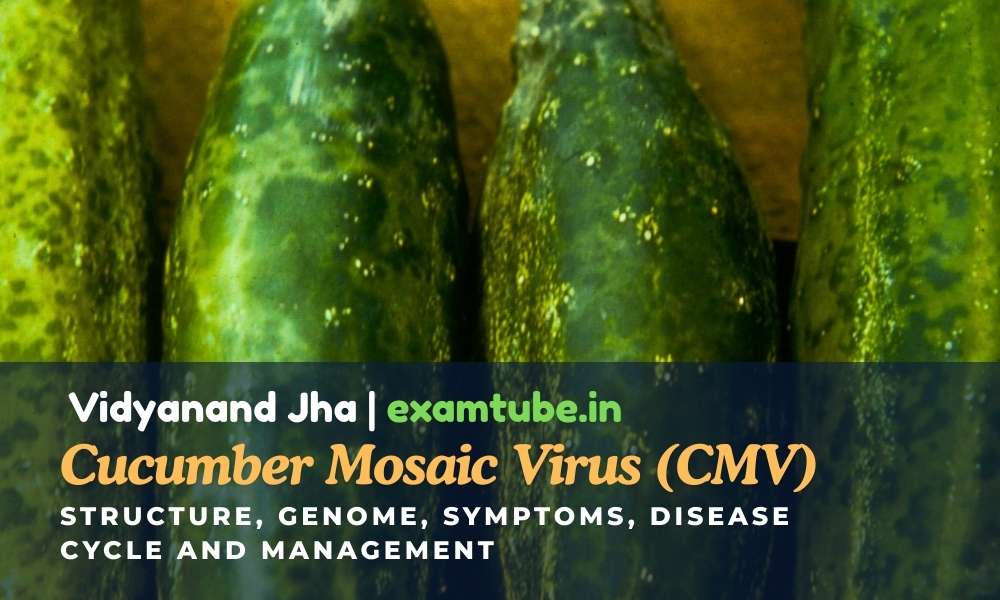
Cucumber Mosaic Virus (CMV): Structure, Genome, Symptoms, Disease Cycle and Management
Cucumber Mosaic Virus (CMV): Introduction and Importance Cucumber Mosaic Virus (CMV) (plant-infecting RNA virus) is one of the most economic...