
Practice question
Question
What limits the abundance of top-level carnivores in an ecosystem?
Explanation
Energy availability limits top carnivores because production decreases at every trophic transfer. Apex predators depend on a broad prey base, require large home ranges, and occur at low population density; a small decline in lower-level production can therefore make their populations nonviable. Competition, climate, and predation can matter locally, but they operate within this energetic constraint. The pattern also explains why habitat fragmentation and prey depletion disproportionately threaten large predators and why their recovery requires restoration of lower trophic levels. The ten-percent heuristic is useful for prediction but not exact; empirical transfer efficiencies vary with food quality, ectothermy, producer defenses, and detrital routing. Higher trophic levels are often vulnerable because low energy supply produces small populations that are sensitive to habitat fragmentation and environmental variability. Ecological pyramids must be interpreted according to what is measured—individuals, standing dry mass, or energy flux—because these variables need not have the same shape. Standardizing by area and, for rates, by time is essential; otherwise ecosystems of different size, depth, or sampling duration cannot be compared meaningfully.
Related blogs
Guides and insights connected to this topic

Coronavirus Structure, Genome, Replication, Symptoms, Pathogenesis, and Prevention
Structure of Coronavirus Coronaviruses (enveloped RNA viruses) fall in the virus family Coronaviridae, order Nidovirales. They are enveloped...

Cucumber Mosaic Virus (CMV): Structure, Genome, Symptoms, Disease Cycle and Management
Cucumber Mosaic Virus (CMV): Introduction and Importance Cucumber Mosaic Virus (CMV) (plant-infecting RNA virus) is one of the most economic...
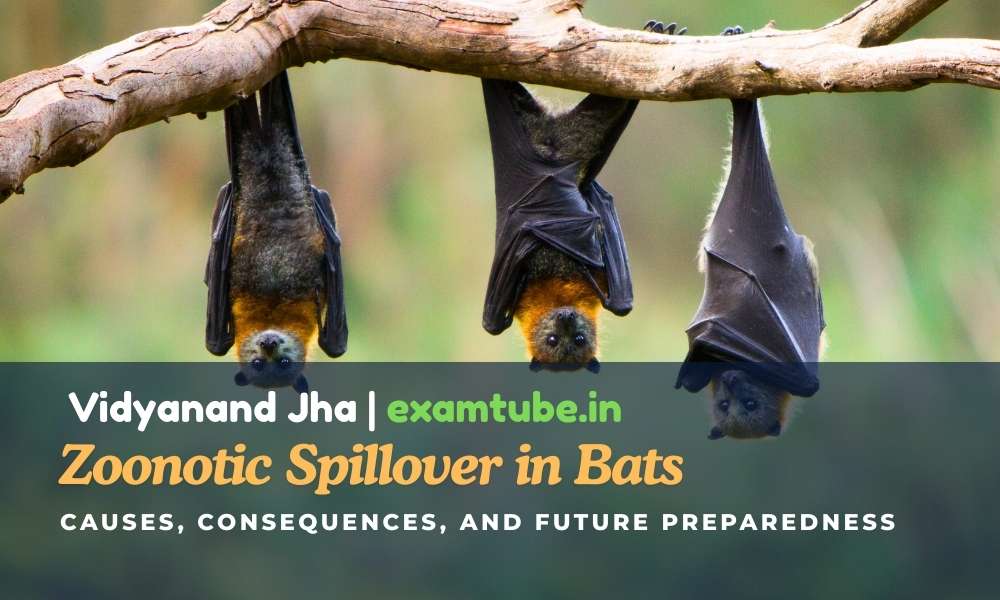
Zoonotic Spillover in Bats: Causes, Consequences, and Future Preparedness
Bats: General Characteristics and Classification Bats are small mammals capable of true sustained flight. They belong to the second-largest...