
Practice question
Question
What is the typical fluorescence lifetime?
Explanation
Fluorescence originates from a spin-allowed singlet-singlet transition that occurs extremely rapidly after photon absorption. The excited S1 state deactivates through radiative and competing non-radiative pathways within picoseconds to nanoseconds, yielding lifetimes typically between one to ten nanoseconds for biomolecules like tryptophan, fluorescein and GFP. Phosphorescence, involving spin-forbidden triplet to singlet conversion, persists milliseconds to seconds and is distinct. Lifetimes of microseconds, milliseconds or seconds therefore cannot represent prompt fluorescence, while around ten nanoseconds accurately captures its intrinsic photophysical timescale in aqueous solution.
Related blogs
Guides and insights connected to this topic
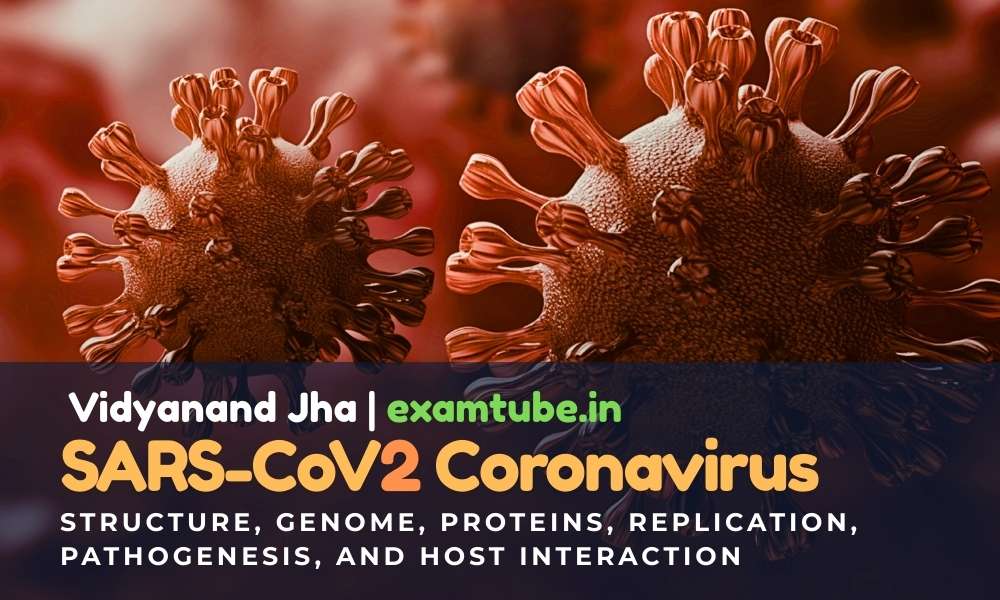
SARS-CoV-2 Coronavirus: Structure, Genome, Proteins, Replication, Pathogenesis, and Host Interaction
Coronavirus Overview Coronaviruses (CoVs) are enveloped viruses (surrounded by a lipid membrane derived from host cells), belonging to the s...

Coronavirus Structure, Genome, Replication, Symptoms, Pathogenesis, and Prevention
Structure of Coronavirus Coronaviruses (enveloped RNA viruses) fall in the virus family Coronaviridae, order Nidovirales. They are enveloped...

Cucumber Mosaic Virus (CMV): Structure, Genome, Symptoms, Disease Cycle and Management
Cucumber Mosaic Virus (CMV): Introduction and Importance Cucumber Mosaic Virus (CMV) (plant-infecting RNA virus) is one of the most economic...