
Practice question
Question
The term 'metapopulation' was coined by:
Explanation
Richard Levins introduced the term and formal concept of a metapopulation in the late 1960s while developing models of populations occupying temporary habitat patches. His classic formulation tracked the fraction of suitable patches occupied, balancing colonization of empty patches against extinction of occupied ones. This abstraction showed how a species could persist regionally even when individual local populations repeatedly vanished. Robert MacArthur and E. O. Wilson developed island biogeography, a closely related theory balancing immigration and extinction in island species richness, but they did not coin “metapopulation.” Their work strongly influenced landscape and patch ecology, which may explain the plausible distractors. Levins’s model also established a threshold condition: colonization must be sufficiently strong relative to extinction for nonzero regional occupancy to persist. Modern metapopulation theory extends the framework by including patch area, isolation, habitat quality, rescue effects, demographic stochasticity, and explicit dispersal. The historical attribution matters because it connects the word to a specific theoretical shift—from treating populations as spatially continuous units to viewing them as networks of locally dynamic patches.
Related blogs
Guides and insights connected to this topic

SARS-CoV-2 Coronavirus: Structure, Genome, Proteins, Replication, Pathogenesis, and Host Interaction
Coronavirus Overview Coronaviruses (CoVs) are enveloped viruses (surrounded by a lipid membrane derived from host cells), belonging to the s...

Cucumber Mosaic Virus (CMV): Structure, Genome, Symptoms, Disease Cycle and Management
Cucumber Mosaic Virus (CMV): Introduction and Importance Cucumber Mosaic Virus (CMV) (plant-infecting RNA virus) is one of the most economic...
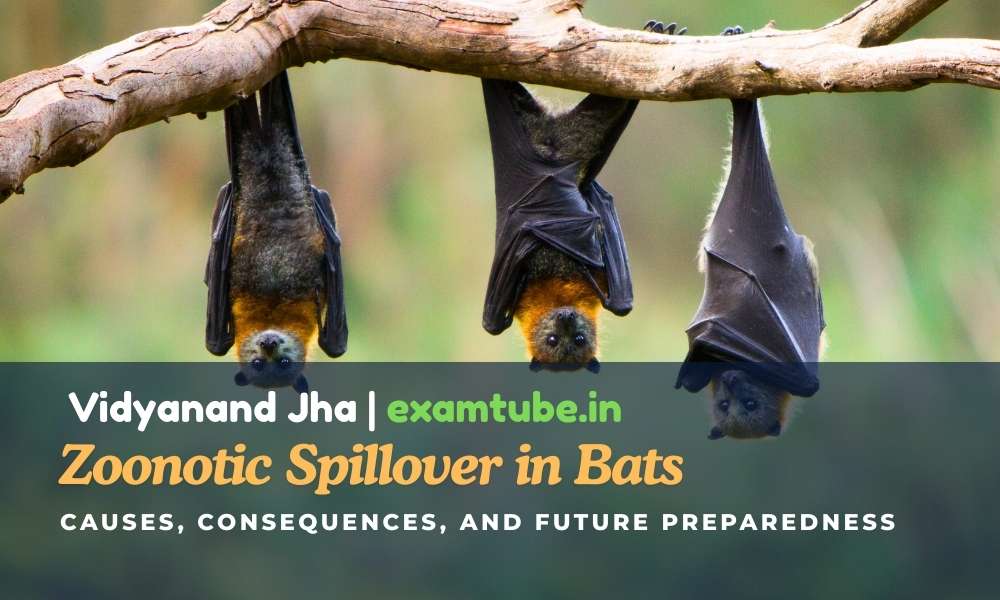
Zoonotic Spillover in Bats: Causes, Consequences, and Future Preparedness
Bats: General Characteristics and Classification Bats are small mammals capable of true sustained flight. They belong to the second-largest...