
Practice question
Question
In peptide analysis, which cleavage forms b/y ions?
Explanation
Peptide backbone contains three bonds repeating per residue: N-Cα, Cα-C carbonyl, and C-N amide peptide bond. Fragmentation nomenclature associates specific bond cleavage with ion type. Breaking the amide linkage CO-NH retains N-terminal portion as b ion and C-terminal portion as y ion, most common pathway under collision-induced dissociation due to relative bond weakness and proton mobility mechanism. Cleavage of N-Cα produces c/z ions characteristic of electron transfer dissociation, while Cα-CO yields a/x ions. Thus CO-NH scission directly generates b/y series used for sequence determination in proteomics data analysis routinely performed.
Related blogs
Guides and insights connected to this topic
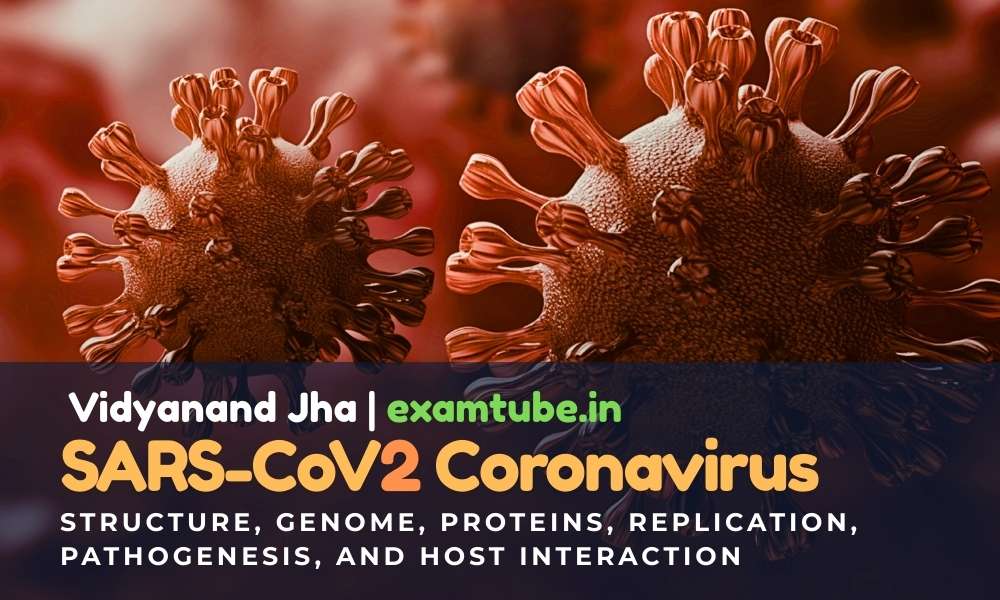
SARS-CoV-2 Coronavirus: Structure, Genome, Proteins, Replication, Pathogenesis, and Host Interaction
Coronavirus Overview Coronaviruses (CoVs) are enveloped viruses (surrounded by a lipid membrane derived from host cells), belonging to the s...

Coronavirus Structure, Genome, Replication, Symptoms, Pathogenesis, and Prevention
Structure of Coronavirus Coronaviruses (enveloped RNA viruses) fall in the virus family Coronaviridae, order Nidovirales. They are enveloped...

Cucumber Mosaic Virus (CMV): Structure, Genome, Symptoms, Disease Cycle and Management
Cucumber Mosaic Virus (CMV): Introduction and Importance Cucumber Mosaic Virus (CMV) (plant-infecting RNA virus) is one of the most economic...