
Practice question
Question
In a typical grassland ecosystem, the pyramid of numbers is:
Explanation
Grasslands commonly have upright pyramids of numbers because many individual grasses and herbs support fewer herbivorous mammals and insects, followed by still fewer predators. Declining energy availability helps reduce sustainable abundance upward, while predator body size and territory requirements accentuate the pattern. Numerical pyramids are not guaranteed to mirror energy: parasite-rich systems or a few large plants supporting many insects can invert them. The grassland example works because producer individuals are numerous rather than exceptionally large. Higher trophic levels are often vulnerable because low energy supply produces small populations that are sensitive to habitat fragmentation and environmental variability. Ecological pyramids must be interpreted according to what is measured—individuals, standing dry mass, or energy flux—because these variables need not have the same shape. Standardizing by area and, for rates, by time is essential; otherwise ecosystems of different size, depth, or sampling duration cannot be compared meaningfully. Turnover explains many apparent paradoxes: a small, fast-renewing stock can support a larger consumer stock without reversing the direction of energy transfer.
Related blogs
Guides and insights connected to this topic

Coronavirus Structure, Genome, Replication, Symptoms, Pathogenesis, and Prevention
Structure of Coronavirus Coronaviruses (enveloped RNA viruses) fall in the virus family Coronaviridae, order Nidovirales. They are enveloped...

Cucumber Mosaic Virus (CMV): Structure, Genome, Symptoms, Disease Cycle and Management
Cucumber Mosaic Virus (CMV): Introduction and Importance Cucumber Mosaic Virus (CMV) (plant-infecting RNA virus) is one of the most economic...
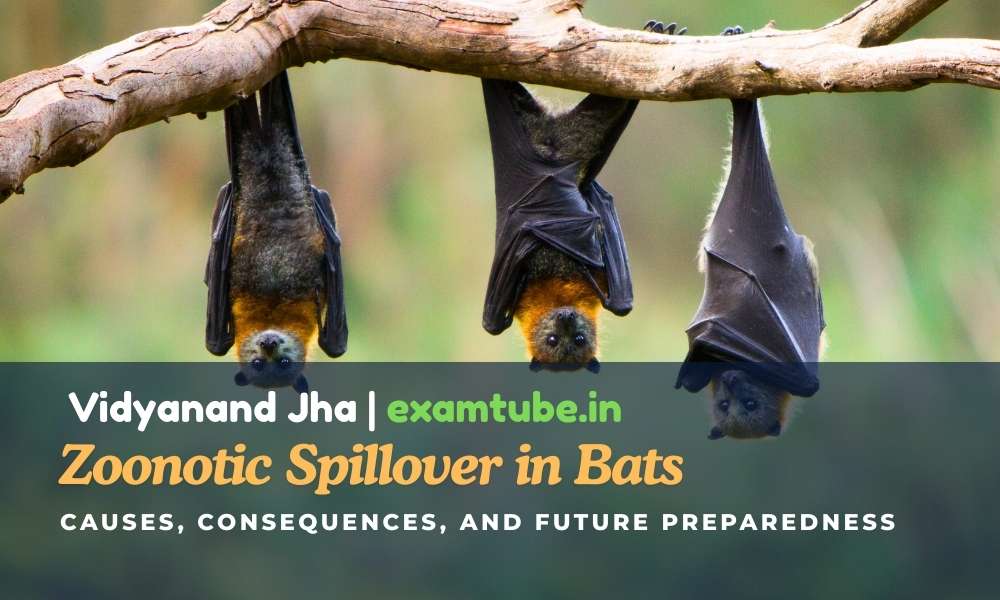
Zoonotic Spillover in Bats: Causes, Consequences, and Future Preparedness
Bats: General Characteristics and Classification Bats are small mammals capable of true sustained flight. They belong to the second-largest...