
Practice question
Question
A harmless fish resembling a venomous one shows:
Explanation
A harmless fish that resembles a venomous fish gains protection without producing the costly defense itself, which is the defining asymmetry of Batesian mimicry. Predators that have been injured by, or have learned to avoid, the venomous model generalize its recognizable shape, coloration, or behavior to the edible mimic. The mimic benefits because mistaken identity lowers attack probability, while excessive mimic abundance can disadvantage the model by making its warning signal less reliable. This contrasts with Müllerian mimicry, where both resembling species are defended and share the cost of educating predators. Wasmannian mimicry specifically concerns organisms resembling social insects with which they associate, and aggressive mimicry helps a predator or parasite approach prey or hosts. “Defensive coloration” is too broad: it includes crypsis and warning coloration but does not identify the model–mimic relationship. The key biological evidence would be that the model is genuinely venomous, the mimic lacks comparable venom, their ranges overlap with the relevant predator community, and resemblance measurably reduces attacks.
Related blogs
Guides and insights connected to this topic

Cucumber Mosaic Virus (CMV): Structure, Genome, Symptoms, Disease Cycle and Management
Cucumber Mosaic Virus (CMV): Introduction and Importance Cucumber Mosaic Virus (CMV) (plant-infecting RNA virus) is one of the most economic...
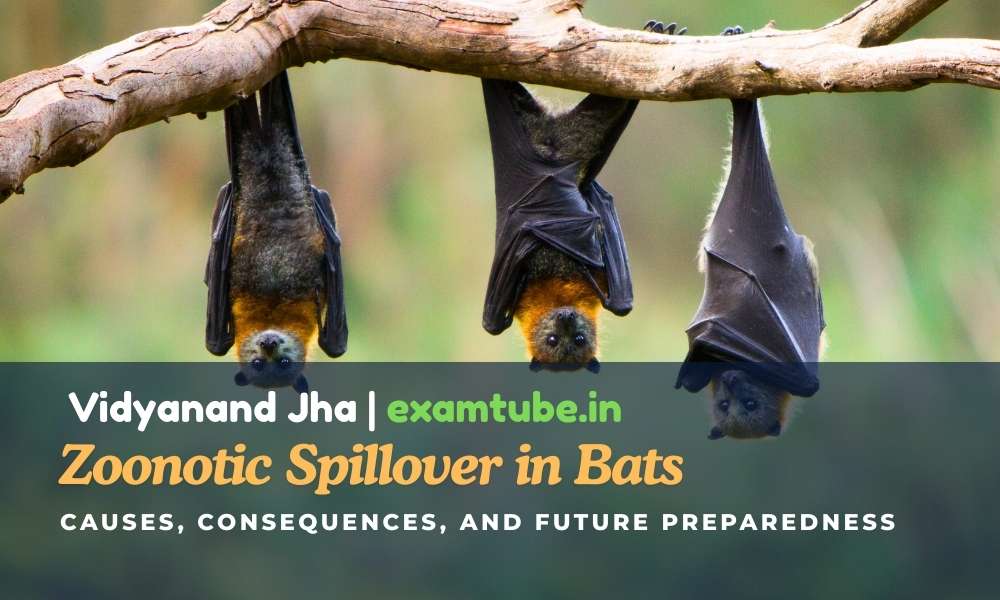
Zoonotic Spillover in Bats: Causes, Consequences, and Future Preparedness
Bats: General Characteristics and Classification Bats are small mammals capable of true sustained flight. They belong to the second-largest...

Crimean-Congo Hemorrhagic Fever Virus (CCHFV): Transmission, Replication, Pathogenesis, Clinical Features, Diagnosis, Treatment, and Prevention
Structure of Crimean-Congo Hemorrhagic Fever Virus Crimean-Congo hemorrhagic fever virus (– causative agent of CCHF) falls under the family...