
Practice question
Question
Which grassland has scattered trees?
Explanation
A savanna is a tropical or subtropical grassland in which a continuous or nearly continuous herbaceous layer coexists with scattered trees and shrubs. Seasonal rainfall supplies enough water for some woody plants but not enough, or not consistently enough, to maintain a closed forest canopy. Fire and grazing are equally important: grasses can regrow from protected basal tissues, whereas frequent burning and herbivory limit many tree seedlings. Adult trees often have deep roots, thick bark, small leaves, or drought-deciduous foliage. The balance among rainfall, fire, soil, herbivores, and human land use controls tree density, so savannas grade from open grassland to woodland. Temperate prairies may contain occasional trees but are defined by cold winters and are typically more continuously treeless. Tundra is too cold for substantial tree growth, while “prairie” is a temperate grassland type. Scattered woody vegetation above a grass-dominated ground layer is therefore the characteristic structural signature of savanna, produced by seasonal water limitation and recurring disturbance.
Related blogs
Guides and insights connected to this topic
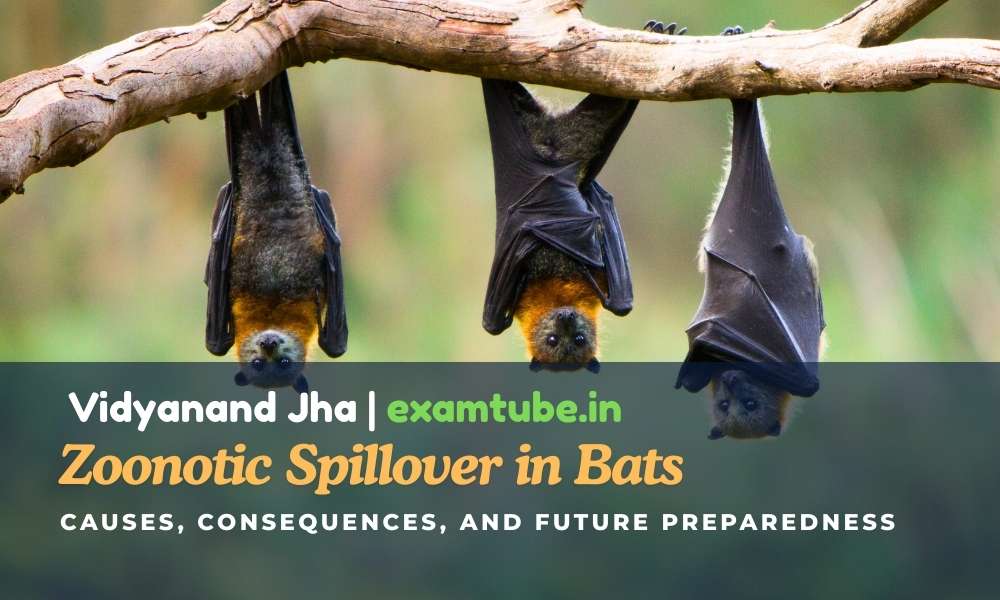
Zoonotic Spillover in Bats: Causes, Consequences, and Future Preparedness
Bats: General Characteristics and Classification Bats are small mammals capable of true sustained flight. They belong to the second-largest...

Eukaryotic DNA Isolation: Principle, Materials, Procedure and Results
What is DNA Extraction? Deoxyribonucleic acid (DNA) extraction is the process by which DNA is separated from proteins, membranes, and other...

PYR Test: Principle, Media, Steps, Results, Uses
Introduction to the PYR TestThe PYR test (Pyrrolidonyl Arylamidase test) is an essential biochemical assay used primarily for the identifica...