
Practice question
Question
What is a functional web?
Explanation
A functional food web emphasizes interactions that strongly influence population dynamics, community composition, or ecosystem processes rather than cataloguing every observed feeding link. Weak or incidental links may be omitted, while keystone predation, dominant energy channels, and major competitive or mutualistic effects are highlighted. This differs from a source web, which traces all foods used by selected consumers, and a community web, which attempts broad linkage coverage. Functional importance depends on interaction strength and system response, not simply feeding frequency. Food-web structure also reflects population persistence: upper levels need enough total production and sufficiently stable prey populations to avoid demographic extinction. Detrital and grazing channels continually exchange material, because waste and mortality feed decomposers while microbial and detritivore biomass supports predators. Quantitative interpretation requires explicit system boundaries and time scales; otherwise export, migration, storage, or seasonal turnover can appear to violate energy balance. Thermodynamic constraints set broad patterns, but species traits, defenses, body size, habitat structure, and disturbance determine the efficiencies observed in a particular ecosystem.
Related blogs
Guides and insights connected to this topic

SARS-CoV-2 Coronavirus: Structure, Genome, Proteins, Replication, Pathogenesis, and Host Interaction
Coronavirus Overview Coronaviruses (CoVs) are enveloped viruses (surrounded by a lipid membrane derived from host cells), belonging to the s...

Cucumber Mosaic Virus (CMV): Structure, Genome, Symptoms, Disease Cycle and Management
Cucumber Mosaic Virus (CMV): Introduction and Importance Cucumber Mosaic Virus (CMV) (plant-infecting RNA virus) is one of the most economic...
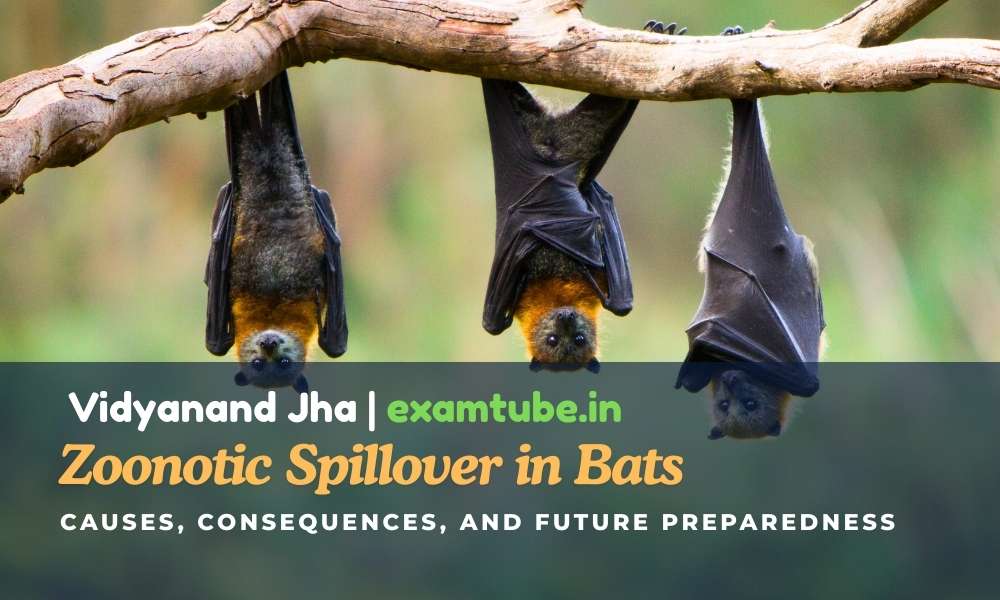
Zoonotic Spillover in Bats: Causes, Consequences, and Future Preparedness
Bats: General Characteristics and Classification Bats are small mammals capable of true sustained flight. They belong to the second-largest...