
Practice question
Question
Poor dispersers in fragmented habitats:
Explanation
“Are at higher extinction risk” for poor dispersers in fragmented habitats. This relationship follows from the ecological mechanism represented by the terms in the item, not merely from an association between their names. The mechanism should be evaluated across both local and global scales. Local disappearance can be reversed by recolonization, whereas global extinction is irreversible and requires the loss of every surviving population. The remaining alternatives—“Adapt well to new environments”, “Easily migrate”, “Show higher reproductive rate”—refer to different states, processes, or scales and therefore do not express the same causal relationship. Human-driven habitat conversion, exploitation, introduced enemies, pollution, and climate change often interact rather than acting independently. Traits such as slow reproduction or ecological specialization can magnify vulnerability. The cited framing is therefore most useful when treated as a conditional biological claim, with assumptions about scale and environmental context kept explicit. Linking the wording to measurable consequences for fitness, abundance, or flux gives the conclusion its scientific meaning and prevents a purely mnemonic interpretation.
Related blogs
Guides and insights connected to this topic

SARS-CoV-2 Coronavirus: Structure, Genome, Proteins, Replication, Pathogenesis, and Host Interaction
Coronavirus Overview Coronaviruses (CoVs) are enveloped viruses (surrounded by a lipid membrane derived from host cells), belonging to the s...

Cucumber Mosaic Virus (CMV): Structure, Genome, Symptoms, Disease Cycle and Management
Cucumber Mosaic Virus (CMV): Introduction and Importance Cucumber Mosaic Virus (CMV) (plant-infecting RNA virus) is one of the most economic...
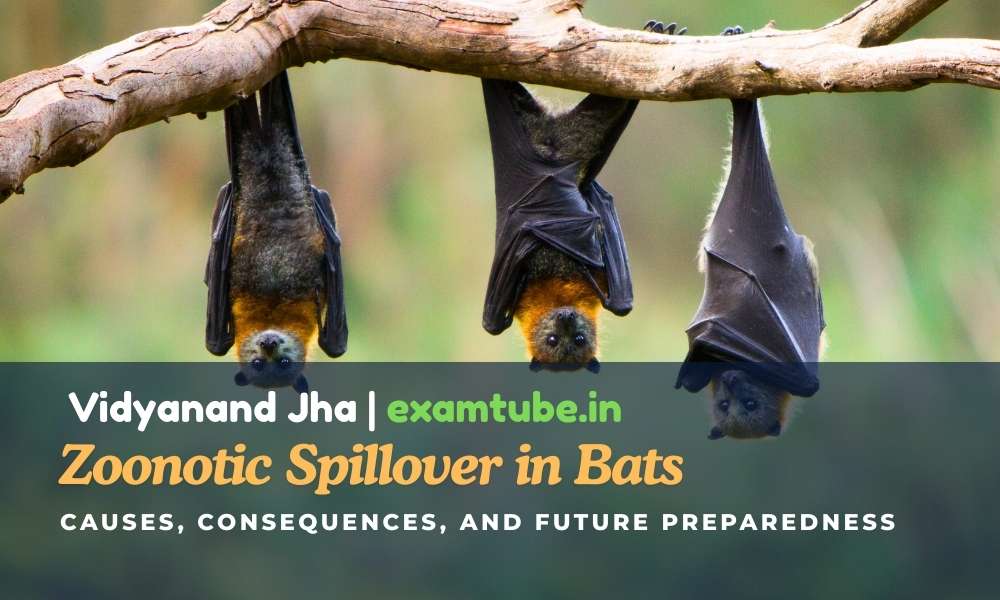
Zoonotic Spillover in Bats: Causes, Consequences, and Future Preparedness
Bats: General Characteristics and Classification Bats are small mammals capable of true sustained flight. They belong to the second-largest...