
Practice question
Question
Example of top-down control:
Explanation
“Removing predators” for example of top-down control. This relationship follows from the ecological mechanism represented by the terms in the item, not merely from an association between their names. Effective control reduces propagule pressure or population growth without causing unacceptable non-target effects. Repeated monitoring is necessary because seed banks, dormant stages, recolonization, and density-dependent compensation can reverse short-term gains. The remaining alternatives—“Nutrient addition”, “Herbivore increase biomass”, “Plants controlling animals”—refer to different states, processes, or scales and therefore do not express the same causal relationship. Management outcomes depend on scale and context: suppressing abundance at one site does not guarantee regional eradication when dispersal reconnects treated and untreated populations. The cited framing is therefore most useful when treated as a conditional biological claim, with assumptions about scale and environmental context kept explicit. Linking the wording to measurable consequences for fitness, abundance, or flux gives the conclusion its scientific meaning and prevents a purely mnemonic interpretation.
Related blogs
Guides and insights connected to this topic

Coronavirus Structure, Genome, Replication, Symptoms, Pathogenesis, and Prevention
Structure of Coronavirus Coronaviruses (enveloped RNA viruses) fall in the virus family Coronaviridae, order Nidovirales. They are enveloped...

Cucumber Mosaic Virus (CMV): Structure, Genome, Symptoms, Disease Cycle and Management
Cucumber Mosaic Virus (CMV): Introduction and Importance Cucumber Mosaic Virus (CMV) (plant-infecting RNA virus) is one of the most economic...
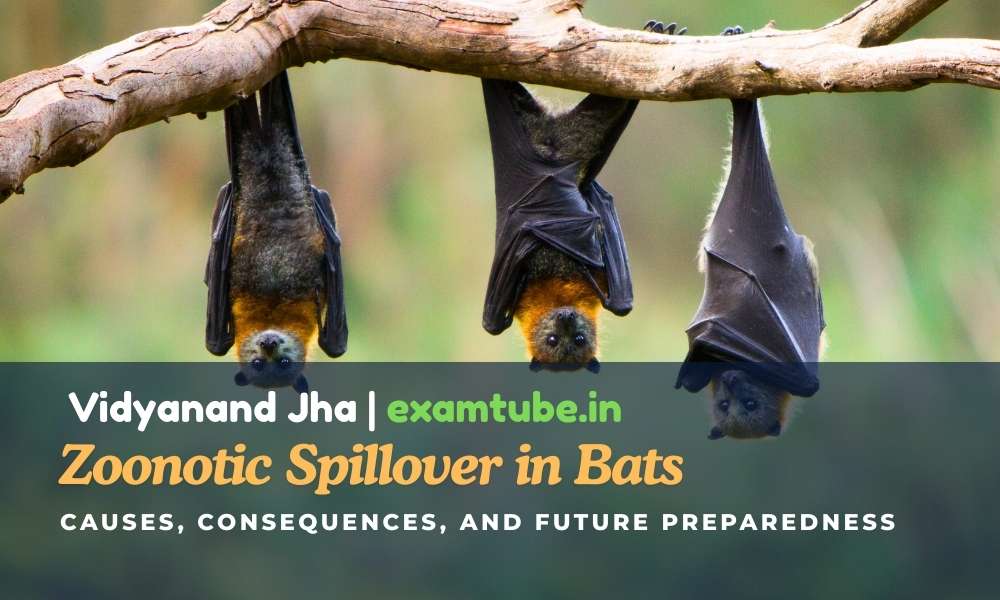
Zoonotic Spillover in Bats: Causes, Consequences, and Future Preparedness
Bats: General Characteristics and Classification Bats are small mammals capable of true sustained flight. They belong to the second-largest...