
Practice question
Question
Which of the following best reflects competition for shared prey?
Explanation
The stated key is scientifically inconsistent with the wording. Apparent competition occurs when two prey species share a predator, not when two consumers compete for shared prey. Competition for shared prey is ordinarily exploitative competition between predators, but that category is absent from the listed choices. Ecological interaction labels describe causal pathways rather than merely similar outcomes. Two organisms can decline together because they consume the same limiting resource, physically exclude one another, or are connected through a common predator. Experiments distinguish these cases by manipulating resources, access, or enemy abundance. Correct classification matters because coexistence mechanisms also differ: resource partitioning reduces exploitation, spatial separation may reduce interference, and enemy specialization can weaken apparent competition. In this context, the keyed term, Apparent, identifies the relevant mechanism or quantitative relationship and links the observed pattern to its underlying ecological cause. The distinction is testable by measuring changes in organisms, resources, or process rates through time rather than relying on the label alone.
Related blogs
Guides and insights connected to this topic

Cucumber Mosaic Virus (CMV): Structure, Genome, Symptoms, Disease Cycle and Management
Cucumber Mosaic Virus (CMV): Introduction and Importance Cucumber Mosaic Virus (CMV) (plant-infecting RNA virus) is one of the most economic...
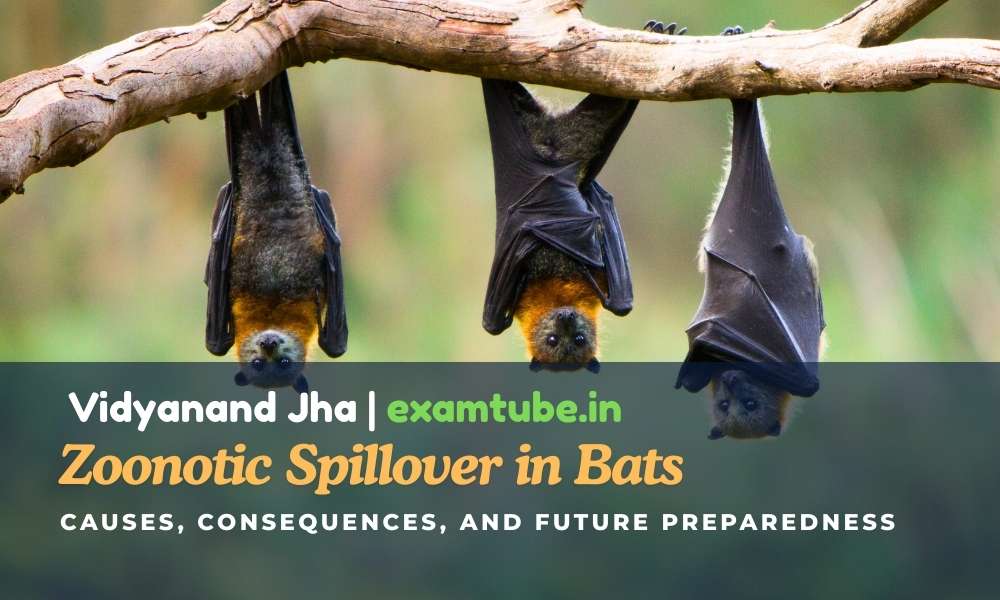
Zoonotic Spillover in Bats: Causes, Consequences, and Future Preparedness
Bats: General Characteristics and Classification Bats are small mammals capable of true sustained flight. They belong to the second-largest...

Crimean-Congo Hemorrhagic Fever Virus (CCHFV): Transmission, Replication, Pathogenesis, Clinical Features, Diagnosis, Treatment, and Prevention
Structure of Crimean-Congo Hemorrhagic Fever Virus Crimean-Congo hemorrhagic fever virus (– causative agent of CCHF) falls under the family...