
Practice question
Question
In presence of refuge, prey population:
Explanation
A refuge protects at least part of a prey population from predator encounters or successful capture. Survivors can reproduce and replenish exposed areas, preventing complete elimination even while predation continues elsewhere. Refuges may be spatial, such as crevices inaccessible to a predator; temporal, such as activity at different times; or size based, when only certain life stages are vulnerable. Their effect can stabilize coexistence or alter cycle amplitude, depending on refuge capacity and movement. Persistence is therefore possible, not guaranteed extinction or perpetual decline. If refuge protection is too weak, predation may still be severe; if too strong, predators may be unable to persist. This reasoning connects organismal behavior with broader ecological consequences. A mechanism that changes encounter rates, resource use, or reproductive success can scale up to alter population trajectories and the structure of species interactions. The alternatives can be separated by asking what changes for each participant and which process causes that change. That approach is more reliable than treating familiar examples as fixed labels, because many interactions shift with environmental context.
Related blogs
Guides and insights connected to this topic

Cucumber Mosaic Virus (CMV): Structure, Genome, Symptoms, Disease Cycle and Management
Cucumber Mosaic Virus (CMV): Introduction and Importance Cucumber Mosaic Virus (CMV) (plant-infecting RNA virus) is one of the most economic...
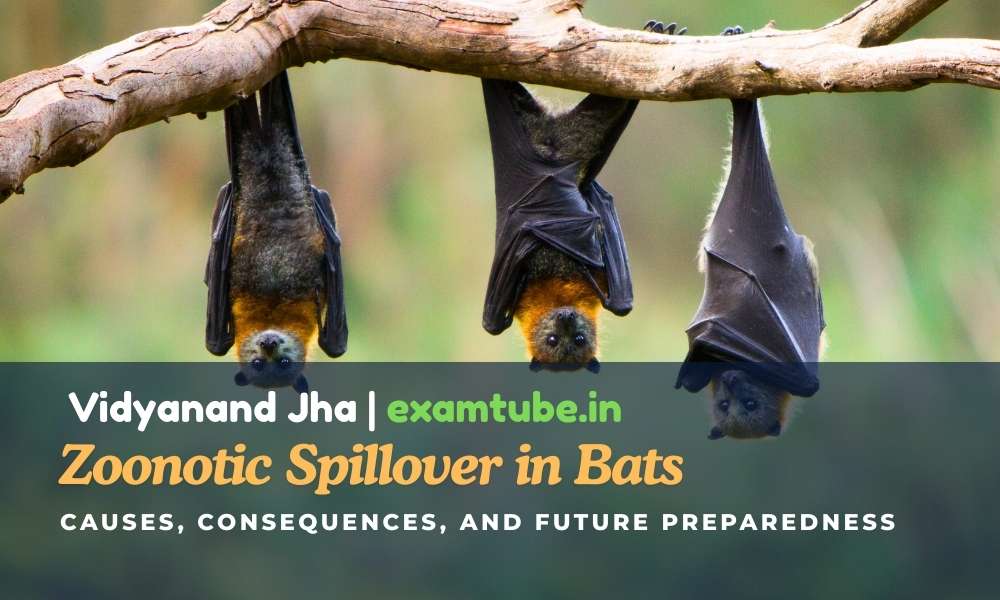
Zoonotic Spillover in Bats: Causes, Consequences, and Future Preparedness
Bats: General Characteristics and Classification Bats are small mammals capable of true sustained flight. They belong to the second-largest...

Crimean-Congo Hemorrhagic Fever Virus (CCHFV): Transmission, Replication, Pathogenesis, Clinical Features, Diagnosis, Treatment, and Prevention
Structure of Crimean-Congo Hemorrhagic Fever Virus Crimean-Congo hemorrhagic fever virus (– causative agent of CCHF) falls under the family...