
Cucumber Mosaic Virus (CMV): Introduction and Importance
Cucumber Mosaic Virus (CMV) (plant-infecting RNA
virus) is one of the most economically important plant viruses, infecting
more than 1,200 species in more than a hundred plant families. It has been
isolated causing high-yield losses in crops like cucumber, tomato, pepper,
lettuce, banana, melon, spinach, and tobacco.
CMV is transmitted predominantly by aphid vectors (sap-sucking
insects) in a non-persistent manner (virus retained briefly on
insect mouthparts) and may also be spread by infected seeds, mechanical
contact, and reservoirs in weeds. The disease causes growth stunting, leaf
mosaic patterns, fruit deformation, and lowered productivity, thereby making it
a serious threat to farmers across the globe.
Causal Organism
Cucumber Mosaic Virus is a plant virus belonging to the genus Cucumovirus (virus genus infecting plants) in the family Bromoviridae (family of positive-sense RNA plant viruses). The virus is quite versatile, with several strains existing that differ in their virulence (ability to cause disease), host range (variety of plants it can infect), and capacity to cause severe symptoms of the disease.
Structure of Cucumber Mosaic Virus
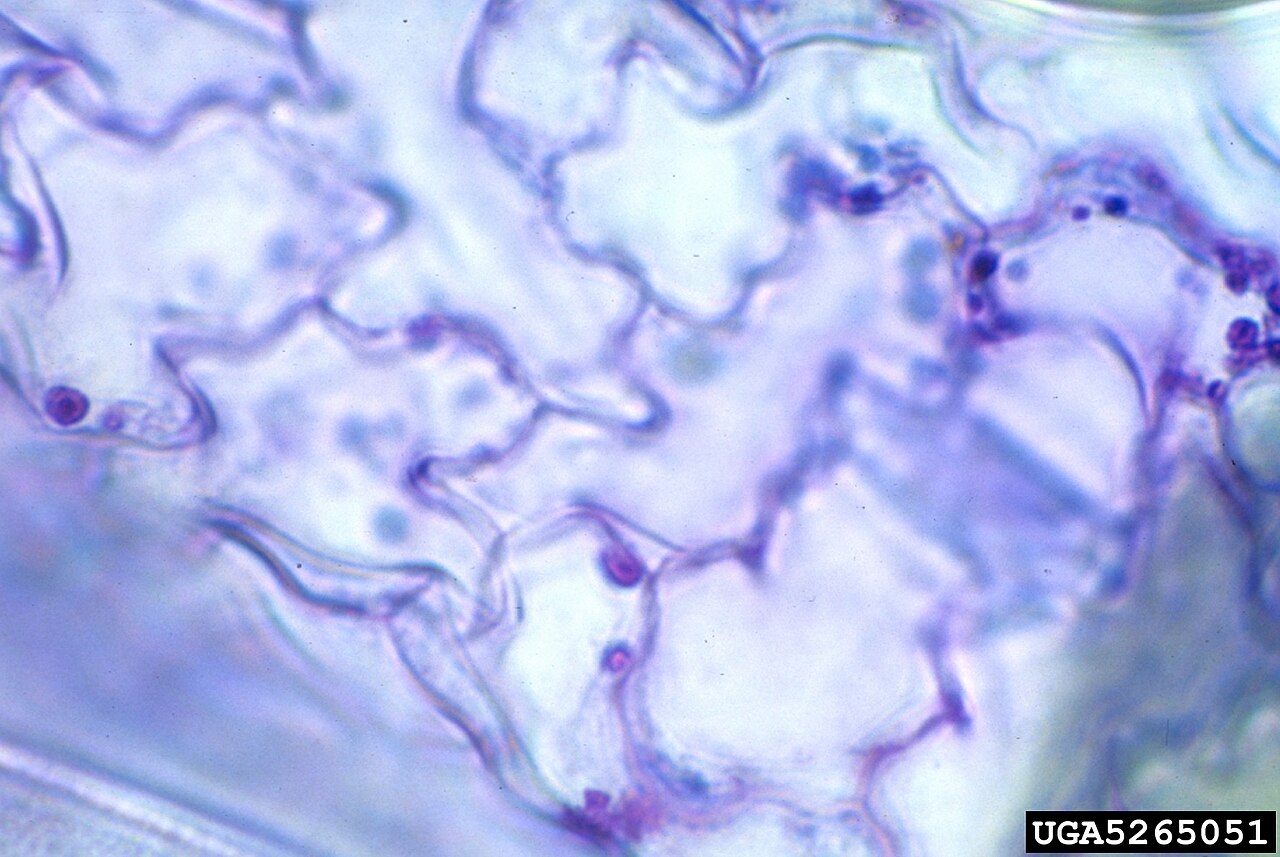
CMV is icosahedral (20-faced symmetrical structure)
in structure, which confers a spherical shape with an approximate diameter of
28–30 nanometers. Unlike many other plant viruses, CMV does not possess a lipid
envelope (outer fatty membrane), which provides stability in the
plant sap and allows it to survive for several months in infected debris. This
structural feature further enables the virus to be easily transmitted through
contact and mechanical means between plants.
Genome Organization of CMV
The CMV genome consists of three single-stranded,
positive-sense RNA segments (RNA that acts directly as mRNA).
- RNA1 encodes the RNA-dependent RNA polymerase (enzyme that replicates viral RNA), which plays a critical role in virus replication.
- RNA2 encodes movement proteins (proteins enabling viral spread inside plants), allowing viruses to move in plant cells as well as inside the host plant.
- RNA3 encodes the capsid protein (protein shell of virus)
and another movement protein, playing an important role in virus stability and
aphid transmission.
In addition, CMV produces subgenomic RNA4 (shorter
RNA derived from viral genome), which directs the synthesis of the coat
protein (protein forming virus particle) necessary for the formation
of new virus particles. The coat protein plays a major role in aphid
transmission, as it interacts with the insect’s mouthparts during feeding.
Some strains of CMV possess satellite RNA (satRNA) (small
RNA dependent on helper virus), which encodes no protein-coding product,
but can profoundly influence disease severity. Its presence may lead to milder
symptoms or induce highly aggressive phenotypes causing intensive stunting and
necrosis in infected plants.
Symptoms of Cucumber Mosaic Virus (CMV)
Leaf Symptoms
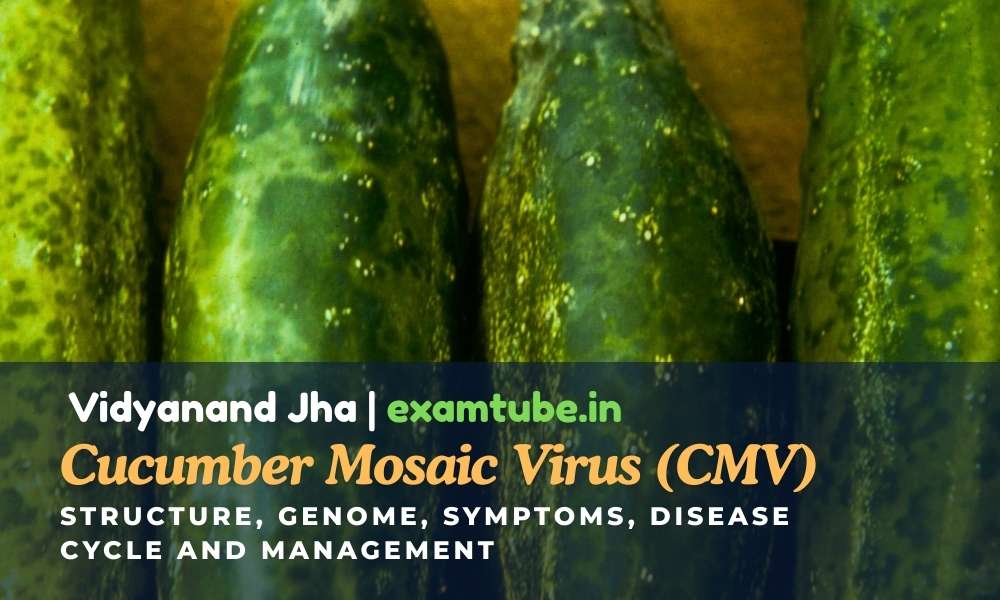
One of the most characteristic symptoms of CMV infection is leaf mosaic (patchy light and dark green coloration), often accompanied by mottling, chlorosis (yellowing due to chlorophyll loss), and leaf distortion. Infected leaves may become wrinkled, curled, or crinkled, reducing photosynthetic efficiency.
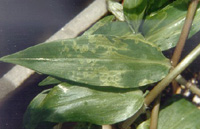
In some plants, such as tomatoes, CMV causes the shoestring
effect (narrow, thread-like leaves), resulting in severe deformation
and weakening of the plant.
Growth and Developmental Symptoms
Affected plants often exhibit stunted growth (reduced
height), shortened internodes, and reduced leaf size. In severe cases,
plants appear dwarfed and bushy. CMV interferes with flower development,
leading to delayed flowering or flower abortion, thereby reducing fruit set and
yield.
Fruit Symptoms
Fruit quality and quantity are significantly affected. In
cucumbers and melons, infected fruits develop deformations, wart-like growths,
uneven shapes, and color-breaking patterns. In tomatoes, CMV causes uneven
ripening, discoloration, poor fruit set, and reduced commercial value. Fruits
may also be smaller, tasteless, cracked, or show internal browning, making them
unmarketable.
Long-Term Effects on Crop Productivity
CMV infection results in reduced photosynthesis, stunted
growth, poor fruit formation, and premature senescence. Infected plants become
more susceptible to secondary infections by bacteria, fungi, and other viruses,
leading to significant economic losses for farmers due to reduced yield and
increased management costs.
Disease Cycle of Cucumber Mosaic Virus (CMV)
Virus Acquisition and Transmission by Aphids
More than 80 species of aphids, including Myzus persicae
(green peach aphid) and Aphis gossypii (melon aphid),
transmit CMV. During feeding, the virus attaches to the stylet (needle-like
mouthpart) of the aphid without circulating inside its body. Being
non-persistent, the virus is transmitted quickly but lost after several
feedings, enabling rapid spread during high aphid activity.
Penetration and Primary Infection
After transmission, CMV enters epidermal cells (outer
plant cells) at the feeding site. The viral RNA is uncoated inside the cell
and hijacks the host’s cellular machinery to synthesize replication proteins.
Initially confined locally, the virus spreads to surrounding tissues within a
few days.
Replication and Cell-to-Cell Movement
Replication occurs using the viral RNA-dependent RNA
polymerase. The virus spreads cell-to-cell via plasmodesmata (microscopic
channels between plant cells), assisted by viral movement proteins that
expand these channels. This systemic movement leads to visible symptoms such as
mosaic patterns, leaf distortion, and chlorosis.
Systemic Infection
When CMV (Cucumber Mosaic Virus) (plant pathogenic
RNA virus) infects the plant’s vascular system, the phloem (tissue
that transports sugars and nutrients), it moves very fast throughout the
entire plant. It can move the virus to the young leaves, stems, flowers, and
fruits, which result in severe mosaic symptoms (patchy light and dark
leaf coloration), stunted growth, and fruit deformities. In this stage, the
virus is systemic (infecting the entire plant rather than a local
site). The infection often leads to weakened plants, reduced photosynthesis
(process of food synthesis in plants), and poor fruit set, thus
affecting crop yield and quality enormously.
Secondary Spread
- This further spreads the disease because CMV-infected plants form virus reservoirs (sources that maintain the virus). The spread becomes most vital when aphids (sap-sucking insect vectors) continue feeding on them and thereafter transmit the virus to new plants.
- Once infected, plants can also spread CMV through mechanical transmission (physical transfer via tools or contact) such as contaminated farming tools, human handling, and direct plant-to-plant contact.
- CMV also transmits through seed
transmission (virus carried inside seeds) in a few crops like
lettuce, beans, and cucumbers, in which the virus from infected seeds is
transferred to the next generation of plants.
Survival during the Off-Season
CMV does not have an overwintering stage except to survive
in weed reservoirs (infected non-crop host plants) and through
seed and debris of the infected plant during the off-season. The virus is
present in many weeds and alternative host plants, allowing it to survive
between growing cycles. When new crops are planted, aphids feeding on these
infected weeds or volunteer plants pick up the virus and introduce it to fresh,
healthy plants, thereby restarting the disease cycle.
Disease Management of Cucumber Mosaic Virus (CMV)
CMV is challenging to manage because the virus has a broad
host range (infects many plant species), spreads easily through
vectors, and survives within weed reservoirs and seeds. There is no direct cure
available for viral infections in plants, so preventive measures (strategies
to stop infection before it occurs) such as vector control, cultural
practices, and resistant crop varieties are the best ways to manage the virus.
A combination of all these strategies must be applied to reduce the spread of
viruses and subsequently crop losses.
Aphid Population Control or Management
- Management of the insect vectors would appear to be effective, at least partially. With CMV mostly being aphid-transmitted, management of their population does bring about effective prevention of further dissemination of the disease.
- Though often ineffectual in curtailing virus
spread when applied through an insecticide strategy (chemical pest
control), reduced population size might effectively slow virus activity.
Instead, IPM (Integrated Pest Management) (eco-friendly pest control
approach) practices such as reflective mulches, row covers, and natural
predators such as ladybugs and lacewings control the proliferation of aphids in
fields. Mineral oils or insecticidal soaps can also disrupt the aphids’ ability
to feed and transfer viruses.
Cultivation of Resistant and Tolerant Crop Varieties
The best long-term management of CMV would be resistant
or tolerant crop varieties (plants that limit virus damage). Some
crops have been bred with resistance or tolerance to CMV, meaning some tomato
and pepper varieties can be infected without major symptoms or loss in yield.
Resistance is not available for cucumbers and melons among other CMV-hosting
crops. Partially resistant or tolerant varieties (plants with reduced
disease severity) can be planted to minimize symptom expression and yield
losses.
Elimination of Infected Plants and Weed Management
Since CMV can survive in infected plants and weeds, removing
virus sources is essential. Infected plants should be identified immediately
and removed to prevent further spread, especially in greenhouse and small farm
settings. Proper sanitation practices (cleaning to prevent disease
spread), such as disinfecting tools and avoiding contact with infected
plants, can also help minimize mechanical transmission.
Cultural Methods
- Several cultural measures can prevent, or at the very least help minimize, damage from CMV infections. Crop rotation (growing different crops sequentially) using non-hosts minimizes opportunities for virus reservoirs to persist from year to year.
- Avoid planting during peak aphid activity to decrease infection rates. The application of reflective mulches (light-reflecting ground covers) prevents aphids from settling on plants and reduces virus infection.
- In greenhouse environments, using insect-proof
screens (physical barriers against insects) and double-door entry
systems helps curb aphid infestation. Proper fertilization and irrigation
enhance plant health and increase resistance to viral infection.
Reducing Mechanical Transmission
CMV can be transmitted through human handling, contaminated
tools, and farm equipment. Farmers and gardeners should not touch infected
plants and then handle healthy ones, as this can mechanically transfer the
virus. Pruning tools should be disinfected and hands washed after working with
plants to prevent accidental transmission.
Biological Control
Some beneficial organisms may assist in managing CMV through
aphid population control or disruption of virus replication. Beneficial insects
such as ladybugs, lacewings, and parasitic wasps (insects that lay
eggs in pests) prey on aphids, reducing their population. Other studies
have used induced resistance (activation of plant defense responses)
by eliciting plant natural defense responses using chemicals or beneficial
microbes.
Chemical and Organic Treatments
- There is no chemical treatment for CMV itself, but natural compounds may decrease virus spread. Some plant-based oils such as neem oil and mineral oils deter aphids from feeding and reduce virus transmission.
- Antiviral
plant extracts or biological treatments that enhance plant immunity are also
applied by some farmers, though their effectiveness varies among crops and
virus strains.
Seed Testing and Certification
Since CMV is seed-borne (transmitted through seeds), certified virus-free seeds must be used for susceptible crops. Seed companies and researchers conduct molecular tests such as RT-PCR (RNA detection technique) or ELISA (antibody-based detection method) to detect CMV in seeds and prevent virus spread. Farmers should buy seeds from reliable sources, as seeds harvested from diseased plants can unknowingly transmit the virus to future crops.