
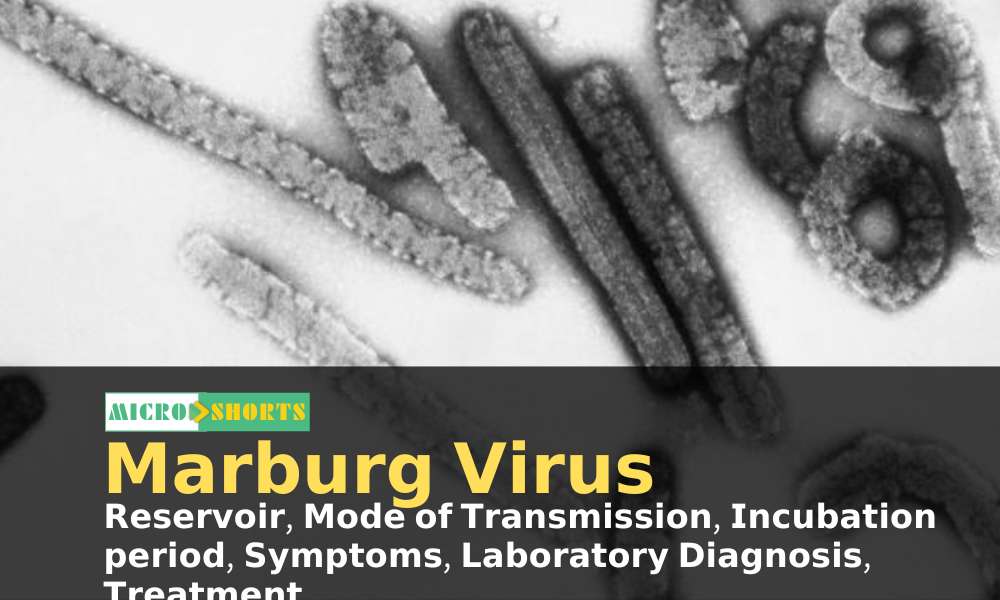
Marburg VirusIt is an another emerging zoonotic infectious disease that causes great concern.It belongs to Filoviridae family.It is formerly known as Marburg haemorrhagic fever (MHF).The rare virus was first identified i...
On this page
Marburg Virus
- It is an another emerging zoonotic infectious disease that causes great concern.
- It belongs to Filoviridae family.
- It is formerly known as Marburg haemorrhagic fever (MHF).
- The rare virus was first identified in 1967 after it caused simultaneous outbreaks of disease in laboratories in Marburg, Germany and Belgrade, Serbia.
- Seven people died who were exposed to the virus while conducting research on monkeys.
- MHF is characterized by systemic viral replication, immunosuppression and abnormal inflammatory responses.
- Without treatment, Marburg can be fatal in up to 88% of people.
- It contain RNA as the genetic material.
- It is a Biosafety level 4 pathogen.
- First outbreak occurred in 1967 in Germany.
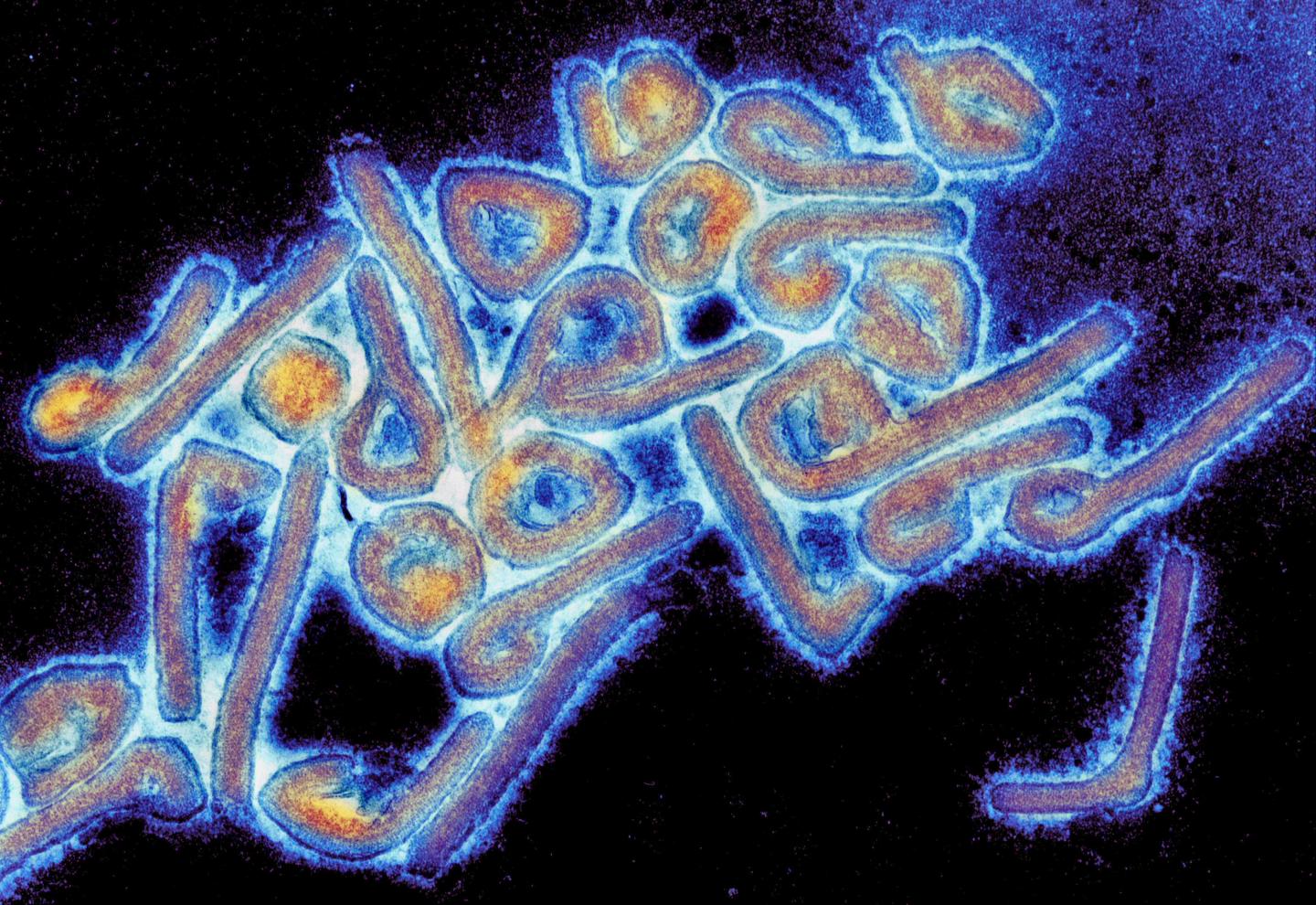
- They are pleomorphic in shape.
Reservoir
- Rousettus aegyptiacus African fruit bats
- Fruit bats infected with Marburg virus do not show obvious signs of illness.
- Primates (including people) can become infected with Marburg virus, and may develop serious disease with high mortality.
- Further study is needed to determine if other species may also host the virus.
Mode of transmission
- Direct contact with infected bats, persons or their body fluids.
- Consumption of fruits contaminated with saliva or urine of infected bats.
- Many patients develop severe haemorrhagic symptoms within seven days.
- Human-to-human transmission is possible through direct contact with bodily fluids, surfaces and materials.
- Incubation Period
● 5-10 days.
Symptom
- Fever, Chills, Severe Head ache, Discomfort.
- Many patients develop severe haemorrhagic symptoms within seven days.
- Symptoms become increasingly severe and can include jaundice.
- Inflammation of the pancreas, severe weight loss, delirium.
- Shock, liver failure, massive hemorrhaging, and multi-organ dysfunction.
Laboratory Diagnosis
- Real-time PCR
- Antibody detection by ELISA (IgG & IgM)
- Serum Neutralization Test
- Electron microscopy
- Virus isolation by cell culture
- All biological specimens should be packaged using the triple packaging system when transported nationally and internationally.
Treatment
- Vaccine & antiviral drugs are not available.
- Supportive hospital therapy should be utilized, which includes balancing the patient's fluids and electrolytes, maintaining oxygen status.
- Blood pressure, replacing lost blood and clotting factors, and treatment for any complicating infection.
- Experimental treatments are validated in non-human primate models but have never been tried in humans.
Related posts
More guides connected to this topic

SARS-CoV-2 Coronavirus: Structure, Genome, Proteins, Replication, Pathogenesis, and Host Interaction
Coronavirus Overview Coronaviruses (CoVs) are enveloped viruses (surrounded by a lipid membrane derived from host cells), belonging to the s...

Coronavirus Structure, Genome, Replication, Symptoms, Pathogenesis, and Prevention
Structure of Coronavirus Coronaviruses (enveloped RNA viruses) fall in the virus family Coronaviridae, order Nidovirales. They are enveloped...

Cucumber Mosaic Virus (CMV): Structure, Genome, Symptoms, Disease Cycle and Management
Cucumber Mosaic Virus (CMV): Introduction and Importance Cucumber Mosaic Virus (CMV) (plant-infecting RNA virus) is one of the most economic...