
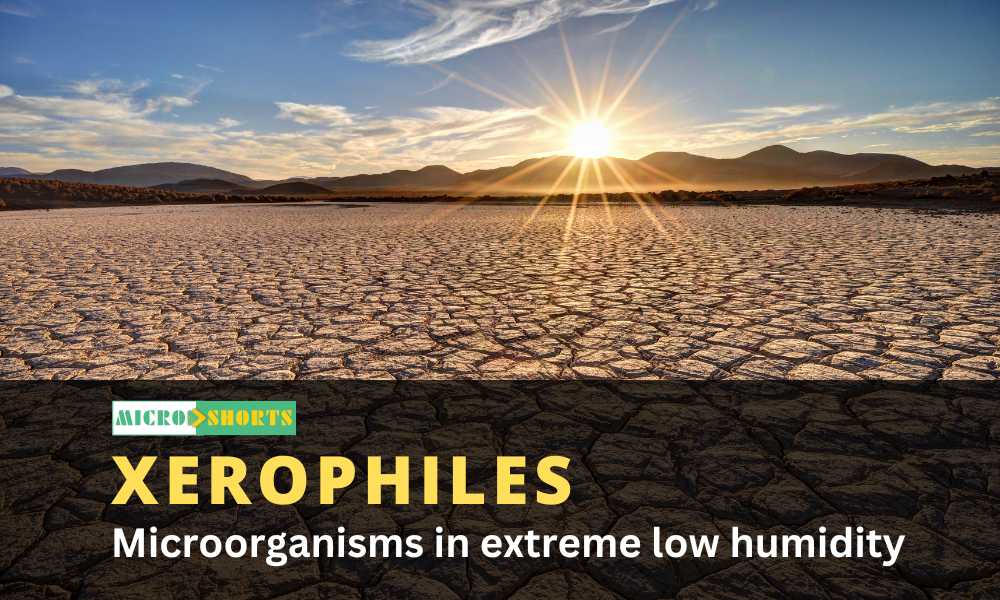
Xerophile Definition and CharacteristicsXerophiles are a group of extremophiles that are capable of surviving in environments with low availability of water or low water activity.Generally, xerophilic organisms are capab...
Xerophile Definition and Characteristics
- Xerophiles are a group of extremophiles that are capable of surviving in environments with low availability of water or low water activity.
- Generally, xerophilic organisms are capable of growing at aw values lower than xerotolerant organisms (aw below 0.8).
- Two major types of the environment provide habitats for the most xerophilic organisms, namely foods preserved by some form of dehydration or organic solute-promoted lowering of aw and saline lakes, where low aw values are a consequence of inorganic ions.
- In environments where little water is available, organisms must take up and maintain sufficient water against extreme concentration gradients to support cellular processes.
- Xerophiles are of different types belonging to different groups of living beings. Xerophilic fungi represent a large group of xerophilic organisms.
- Eukaryotic organisms like plants capable of surviving at low water condition, called xerophytes are also xerophiles.
- Xerophiles are closely related to halophiles as halophilic environments tend to have low water activity.
- Even though water is crucial for many biomolecular processes in living beings, xerophiles have intricate means to survive in conditions with low water activity.
Xerophile Mode of adaptation
Dormancy
- One of the most common responses of prokaryotes to low water conditions is a reversible form of dormancy.
- These organisms under a temporary period of dormancy in the form of spores so that they reduce metabolic activity and resume normal metabolism when appropriate conditions are available.
- The formation of spores and reduction in metabolic activities provide long periods of survival for many microorganisms as well as larger eukaryotes.
Extracellular polysaccharides and biofilm formation
- Various xerophilic organisms form biofilms as it allows the survival of organisms in habitats with low moisture content.
- These biofilms consist of microbial aggregates and extracellular polysaccharides produced by those organisms.
- The extracellular polysaccharides in the biofilms are hydrophilic, which contributes to rapid water absorption rates and restoration of photosynthetic activity.
- Biofilm formation also reduces the need for large quantities of water as they occupy less space and have less metabolic activities.
Cell membrane
- The cell membrane of xerophilic organisms tends to have an increased ratio of fatty acids which creates a tighter lipid packing that preserves the membrane during desiccation.
- Increased cyclopropane fatty acid content in the membrane also reduces the membrane permeability to protons which thus, helps in balancing the intracellular pH.
- Xerophilic microorganisms adapt to low water activity by increasing the concentration of negatively charged phospholipids that facilitates the preservation of membrane bilayer structural integrity.
Proteins
- In the case of xerophytes, a range of proteins that counteract the effects of low water activity is produced.
- These proteins are rich in glycine and have a highly hydrophobic backbone that transitions into the ordered structure under desiccating conditions, preventing denaturation.
- Xerophilic cyanobacteria code for various shock response genes on dehydration that regulate the utilization of water in metabolic processes during desiccation.
Xerophile Examples
- Some common examples of xerophiles are Aspergillus penicillioides, Cereus jamacaru, Deinococcus radiodurans, Aphanothece halophytica, Anabaena, Bradyrhizobium japonicum, Saccharomyces bailli, etc.
Related posts
More guides connected to this topic
Microorganisms in heavy metals (Metallotolerant)
Metallotolerant Definition and CharacteristicsMetallotolearnt microorganisms are the microorganisms that are capable of tolerating and detox...

Microorganisms in rocks (Endolith/Hypolith)
Endolith Definition and CharacteristicsEndolith is an organism that survives in various inhospitable environments throughout the world,...
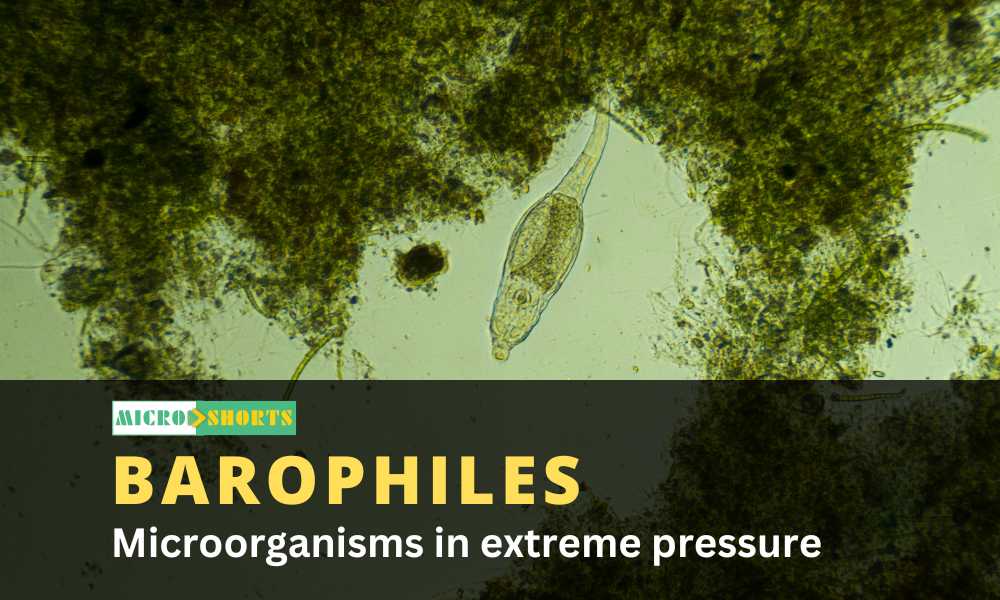
Microorganisms in extreme pressure (Piezophiles/ Barophiles)
Piezophile Definition and CharacteristicsBarophiles are defined as organisms that grow and thrive optimally at pressures greater than atmosp...