
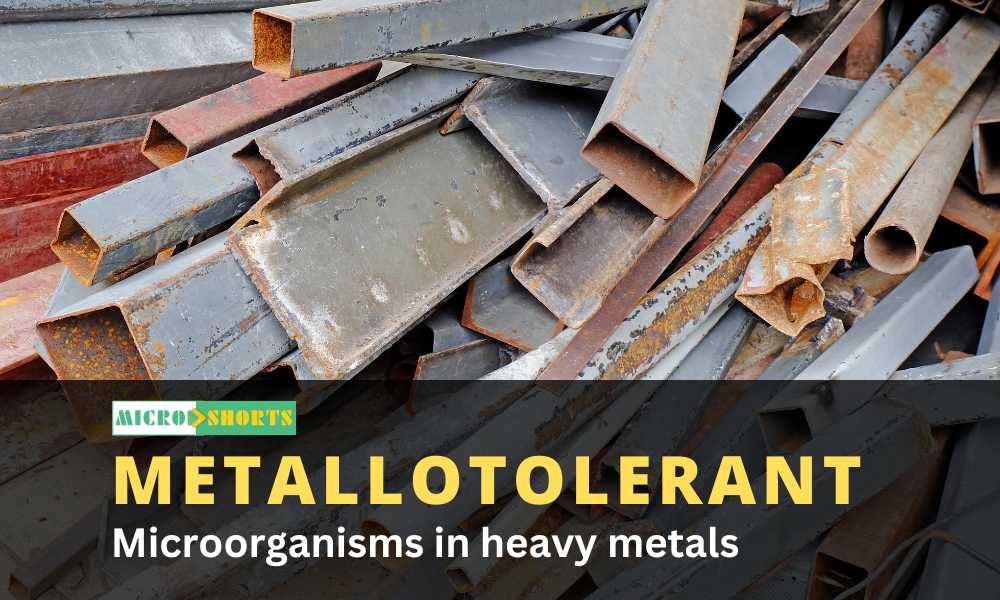
Metallotolerant Definition and CharacteristicsMetallotolearnt microorganisms are the microorganisms that are capable of tolerating and detoxifying high levels of dissolved heavy metals.Microorganisms utilize metals as st...
Metallotolerant Definition and Characteristics
- Metallotolearnt microorganisms are the microorganisms that are capable of tolerating and detoxifying high levels of dissolved heavy metals.
- Microorganisms utilize metals as structural components of biomolecules, as cofactors in reversible oxidation/reduction reactions, and in electron transfer chains during energy conservation.
- However, metals can become toxic if their intracellular concentrations are too high.
- Most metallotolerant microorganisms tend to be acidophilic as the physiological activities of such microorganisms enable tolerance against high metal concentrations.
- As many metals are more soluble at acidic pH, acidophiles are typically exposed to high metal concentrations and can survive in 1000-fold higher amounts than neutrophilic microorganisms.
- Metallotolerant microbes belong to all bacterial groups studied, mostly among aerobic and facultative aerobic chemo-heterotrophic microorganisms.
- Polluted soils and waters with untreated industrial and urban wastes and samples of the natural environment with a high concentration of metals are important habitats of metallotolerant microorganisms.
- These organisms have different mechanisms that support their survival in very high metal concentrations.
Metallotolerant Mode of adaptation
Membranes
- The membranes of metallotolerant microorganisms are equipped with various channels that prevent the entry of metals ions into the cytoplasm.
- A process termed metal sorption is common in metallotolerant microorganisms where the metal ions are bound to the membrane but cannot enter the cell.
- Besides, different transport channels have regulators lie the ferric uptake regulator that regulates the entry of a large number of iron ions into the cell.
Mineralization
- The process of conversion of organic compounds into inorganic forms so that they can be excreted out of the cell is called mineralization.
- The process is common in many metallotolerant, where they have different enzymes that catalyze the mineralization process.
- Other metabolic processes that convert toxic forms of metals into less toxic forms via enzymatic oxidation and reduction are also studied in these organisms.
Metallotolerant Examples
- Some of the common examples of metallotolerant species include Bacillus subtilis, Bacillus megaterium, Acidithiobacillus ferrooxidans, Acidithiobacillus caldus, Corynebacterium diptheriae, Acidiphilium rubrum, Acidiphilium multivorum, etc.
Related posts
More guides connected to this topic

Microorganisms in rocks (Endolith/Hypolith)
Endolith Definition and CharacteristicsEndolith is an organism that survives in various inhospitable environments throughout the world,...
Microorganisms in extreme pressure (Piezophiles/ Barophiles)
Piezophile Definition and CharacteristicsBarophiles are defined as organisms that grow and thrive optimally at pressures greater than atmosp...

Microorganisms in extreme sugar concentrations (Osmophiles)
Osmophile Definition and CharacteristicsOsmophiles are a group of organisms that are adapted to survive in environments with high osmotic pr...